Episode 131 hr 8 min
Midland
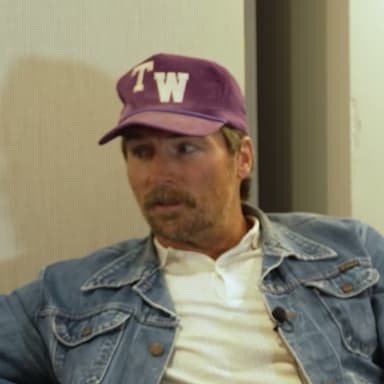
Mark Wystrach, Cameron Duddy and Jess Carson
The sixteen-year overnight success
Mike's twin brother and his band on two years with no record deal, 15 people at a showcase, and what a No. 1 album does not pay you.
Where to watch and listen
- From Mark's first live gig to the overnight success, by his count
- 16 years
- People at the New York label showcase. Mike bought the pizza
- 15
- Grammy nominations for "Drinkin' Problem": Best Country Song and Best Country Duo/Group Performance
- 2
Follow Midland
“Everybody looks at it as this overnight success, but what they don't see is the 16 years of struggling.”
Midland's first album went to No. 1 on the country albums chart, and its single "Drinkin' Problem" earned two Grammy nominations. Before any of that, Mark Wystrach, Cameron Duddy and Jess Carson spent close to two years in Texas with no record deal, playing for beer money and paying their own way to Nashville, and played a New York label showcase at Mercury Lounge to 15 people. Mark, the band's lead singer, is Mike's twin brother. He says the overnight success took 16 years. Mike recorded this one with the three of them in their dressing room at TD Garden in Boston, a few hours before they went on.
Midland started as a recording trip. The three of them went to the Sonic Ranch studio in Texas to cut some songs, and Cameron, who had won an MTV Video Music Award directing Bruno Mars's "Locked Out of Heaven", fronted the money and came to film it. He left as the bass player. The first person he played the demo to was Matt Graham, still their manager, who told him he knew nothing about country music but that it made him feel something.
Then came the gap. Cameron had saved his music video money and bought a house in Texas because, he says, it was the only place they could afford one. The band played Poodie's for beer money and drove themselves to Nashville to write, and Cameron tells of going completely broke and calling Matt Graham before Christmas for a three-month bridge loan to cover the mortgage. Their way into a city where nobody knew them was the video they made for "Fourteen Gears", which Mark calls their Trojan horse. One Texas critic decided they must be a manufactured boy band. Mark says the writing trips were his master's degree, and they ended with Shane McAnally and Josh Osborne co-producing the debut with Dann Huff.
Mike's question is the one most people get wrong about music: does a No. 1 mean you have been paid? Mark's answer is that the label is essentially your investor, the publishing advance is how they kept going, and the real business is touring, which he calls the hardest and most dangerous part, three grown men splitting everything on the road. They talk about working every room at the Grammys, Bruno Mars offering to sign them to his imprint at Atlantic, and rehearsing with Tim McGraw in an arena locker room six months after their truck broke down on the way to a gig.
The last stretch is Insólito, the tequila they built with third-generation distillers, the Herrera brothers, in Mazamitla, Jalisco. By their account it took three and a half years before a bottle went to market, and it launched in 2020 into COVID, which pushed them into selling direct. They close on Stages, their sixth album, out in June 2026, and the "Marlboro Man" video they shot in Sonoita, Arizona, the town the Wystrach twins grew up in, produced by their sister Amy.
What the conversation covers
The demo was the product
One music video for "Fourteen Gears" sold a band nobody in Nashville had heard of. Mark calls it their Trojan horse.
Fund the gap yourself
Close to two years in Texas with no record deal, beer-money gigs and a bridge loan from their own manager.
A No. 1 does not pay you
The label is your investor. The money is in touring, merch and placements, and touring is the hardest part.
Work every room
At the Grammys they got up at every break and introduced themselves to everyone, Jay-Z included.
Do not just slap your name on it
Three and a half years on Insólito with third-generation distillers before it went to market.
Timestamps
Mentioned in this episode
The band
- Midland — Mark Wystrach, Cameron Duddy and Jess Carson. Stages, their sixth album, came out in June 2026
- Insólito Tequila — Built with the Herrera brothers in Mazamitla, Jalisco, and launched in 2020
Named in the episode
- The Sonic Ranch — The Texas studio where the three of them first recorded together, later released as a documentary and soundtrack
- "Marlboro Man" — The single opening Stages, with a video shot in Sonoita, Arizona
Show notes
Midland's first album went to No. 1 on the country albums chart, and "Drinkin' Problem" earned two Grammy nominations. Before any of that, the band spent close to two years in Texas with no record deal, playing for beer money, and played a New York label showcase to 15 people. Mark Wystrach, the band's lead singer and Mike's twin brother, says the overnight success took 16 years. Recorded backstage at TD Garden in Boston, hours before the show.
This episode is presented by Proppel. Hire A-player marketing and ops talent from the US and LATAM, and get 10% off your first hire: https://www.weareproppel.com/theadvantage
Follow Mike on Instagram: @mikewystrach — https://instagram.com/mikewystrach
In this episode:
◼ How one music video got a band nobody knew into Nashville
◼ Why Cameron Duddy came to the first sessions to film them and left as the bass player
◼ Why a No. 1 album does not mean anyone has been paid
◼ Bruno Mars's offer to sign them, and working every room at the Grammys
◼ Why they spent three and a half years on Insólito tequila before selling a bottle
⏱️ CHAPTERS
00:00 The 16-Year Overnight Success
02:11 Pants Down at the Piano
10:55 Hired to Film, Joined the Band
15:26 One Video Sold Nashville
16:59 Called a Manufactured Boy Band
20:50 Two Years, No Record Deal
24:43 15 People at Mercury Lounge
30:27 Nashville Was the Master's Degree
33:43 A No. 1 Doesn't Pay You
37:28 Working the Room at the Grammys
40:07 Bruno Mars Offered a Deal
41:16 Shower Rehearsal With Tim McGraw
46:10 The Opry Was the Scariest
52:31 10,000 Hours Nobody Sees
54:01 Why a Band Built Tequila
1:02:25 The Truck in Marlboro Man
1:06:55 Final Thoughts and Wrap Up
🔗 MIDLAND
Midland → https://www.midlandofficial.com
Instagram → https://www.instagram.com/midland/
Insólito Tequila → https://www.insolitotequila.com
🎙️ THE ADVANTAGE
Apple Podcasts → https://podcasts.apple.com/us/podcast/the-advantage-with-mike-wystrach/id6783458081
Spotify → https://open.spotify.com/show/033DuFkyBRu3qvgp8ozPz1
All episodes → https://mikewystrach.com/podcast
⚡ PRESENTED BY PROPPEL
Proppel places marketing and operations talent from the US, LATAM and beyond, from video editors, designers and media buyers to managers, directors and VPs. It's performance-based: a one-off fee only when you hire, no retainers, and a three-month guarantee on every hire. Get 10% off your first hire → https://www.weareproppel.com/theadvantage
#Midland #TheAdvantage #MikeWystrach
Thumbnail photo of Bruno Mars adapted from "Bruno Mars - 24K Magic Tour" by slgckgc, CC BY 2.0, via Wikimedia Commons.
Full transcript
Mike Wystrach in conversation with Midland. Lightly formatted from the episode audio.
episode: Cigarettes burning Seen the superstars rise seemingly out of nowhere and then be the talk of the town and then just disappear. I go completely broke. You guys were opening for it was Tim McGraw and Faith Hill on tour together. It was a matter of six months between us and the truck that we used to go around in breaking down on the way to a gig, and then this is happening. Was there a moment that any of you guys remember where you're like, holy sht. this is happening. I'm still waiting for that moment. You assume someone's got a number one hit. All right, they're paid. The way you make money in music is really touring and building a base. First of we're promoting things between the gigs. We don't know how to keep our together at this point. We're struggling mentally and emotionally. Super excited for this, guys. Thank you for taking the time. Midlin, better known as Mark Weistrack, Jess Carson, Cameron Dutty. And Mike Weistrach. No. I thought it was better known as Mike Weistrach's twin brother. Twin brother. also my twin brother. super excited. Like I So we saved that as like a reveal later. Yeah, okay. So I'm really excited for this 'cause as I I told you guys kind of pre like I've been able to see behind the scenes since you guys started and see kind of the hustle and the grind, you know, country western band, but I think it l resembles exactly the grind of a startup minus In the startup, you're not on the road seven days a week for years on years on end. But I think the exciting thing, you know, for as I was telling you guys as for our followers is is just like seeing the business aspect behind this. And I think you guys are just born hustlers. All of you guys got your own stuff going on. But let's start at the beginning. Cause I think like maybe a little background of how you guys all know each other. What was what do the scenes look like before Midland? You guys are all doing different stuff at different levels of success and different levels of career, but then I think this was this was a huge bet for all of you guys because you were all finding kind of unique success doing different things and this was kind of like a deviation. But walk us walk me through kind of where you guys were when this started. I can tell you where Midland started for me was at an after party at my house in LA. I had a upright piano and we were having a party, and this guy shows up and I'm sitting there trying to play piano, and some guy comes up and starts playing like great balls of fire. And I look over, damn, that's that's pretty good, man. That's pretty good. I looked and then I look over and I give him a a full once over and I realize that his pants are down around his ankles. And that was really the first time I remember meeting Cameron Dutty. but Jess and Cameron went back before that. That was actually an after party. So where was that? Was that that was 2008. This was an after party for your guys' last show that you guys played with Major Grace. It was at my house. That was at on the rocks. That's how I really got to know you guys. Yeah. And when did you two guys meet? I met Jess through okay, go ahead, I'm done. well, Cameron replaced his cousin playing bass in a van that I was in in LA. I'd moved down it to LA, made the big me and my bandmates got in I had a nineteen seventy one V W bus and we drove that it topped out at like fifty five miles an hour. We drove that thing down to LA. It barely got over the the hill. Yeah. I mean, no, actually. Well, it dropped the hill. Like he was like I was I was getting passed by like semi trucks. Yeah, that was the little that was the little the little four liter, the little tiny Yeah. Same motor has a bug. Yeah. But Cameron's cousin played played bass in in that band. He was a really talented musician and he just he didn't like to tour. He quit midway through a tour that we were on we're actually in Oregon when he quit. And I met Cameron through you and I liked Cameron, you know, from the moment I met him. I met him at one of our shows. And when was this when did you guys meet? Let me pause here for a second. The show is brought to you by Propel. They find brands like yours exceptional marketing and operational talent in the US, Latin markets, and beyond. For now, the links are in the show notes and all of our listeners get ten percent off your first hire. Okay, let's get into it. I just know it was at it was at Borders. I came to see you at Borders, but I I ended up really getting to know you guys when I volunteered. I I wanted to start doing music videos. when were these dates? Is this after two thousand four or two thousand five? No, no, okay. So I would have met you in five or six because what happened was I was in a band when I first moved back down to LA from the Bay Area out of high school. That band didn't work out. But I was now in the scene of musicians in LA because of my cousins. And this is how I meet Jess. And in order to, I think, just continue being creative outside of music, my first passion was doing music videos and short films and stuff. and I was always doing them together, the music and that, like since I was a k much younger. So I volunteered, hey, do you guys need music video? And and and we started this conversation and so it would have been five because I went back up to Santa Barbara where I was l briefly living, pretending to go to college, and we and we shot a music video that never made it past the mini DV tapes that I recorded them on. I didn't even have the follow through to edit this shit together at the time. I was, you know, just a shithead. And this is how this day. Well, there is no video. It's just there's tapes, you know? And it was just a good big goof to get together and I do remember baking 35 cakes and then a la and and convincing that like sorority to let us film there. Yeah. The concept was that we were performing in Isle of Vista, which is the college town at UCSB, and then all these people start joining It wasn't a highbrow idea. It was by any elevated by any means. But three cam three Cameron that's He's had some good ideas and some bad ideas. This is a bad one, Mikey. He was also the g the gateway to a whole other group of friends, which included Mark and like Aaron from Inwall Nation and the De juurs and all these people that but then everyone found their own pockets of success. within their own like with within the same degenerate thing they were doing. yeah, Wu and all those guys that had found this amazing level of success. Yeah, I was Joe guys like d that crew was the beginning of hipsters. I remember the way you guys used to and I was like, man, no one doing a lot of things. Fast forward ten years later, I go to move to Brooklyn, it's like, my God, this is these guys were doing this like twenty years ago. so you guys all kind of advance into different levels of success. And I think, you know, ups and downs obviously. But you guys had started journeys. You were doing modeling and acting. And you were were where were you before right before the band? What were you doing right before the band, Jeff? I moved down from Oregon. I I was honestly s I had moved back to my dad's farm when I was working on the farm. I mean, this was literally the the trade off. Jess says, I'm I'm leaving LA. I'm done with music. I'm gonna go work on the foreign. Okay, I'm No no no, I'm going to right before this band. Right before this band. So But that is relevant. He goes up to Portland. Me and Mark start our own first band. The Young Winsy. You can still find it. Yeah. Jorgens. The Young Windsor. Jet just went up and he ends up s starting a somewhat successful vintage clothing store. The idea that this is we're we're sitting here together and and we've started this fan is is crazy. Whenever we talk about it, we sort of forget how crazy it is. Because we all went different ways. And all found f a fair amount you were on a path of success, all of you independently. I remember texting with Cameron when he won the the VMA for the Bruno Mars video. It was like I know a guy who his his name is being said on MTV. this is insane. Those early days in the grind, you guys came together and then started traveling and I remember being in the white white van that you guys had like Be before you get on that real quick though. because everybody has something going on. I was running a shoe company that started with our brother-in-law with Kevin. And I will say that just like in Freshley, I think when you have an idea that you truly believe in, and when you believe in that hand and you're willing to go all in, it kind of takes that. It has to be something that you really truly would would lay down everything in your life for. So it has to start with that belief. And I think for us, the Genesis was going together and recording at the Sonic Ranch. I just don't want to miss that. To me, that was it, if if, this is music, so it's not necessarily a product. I guess it it it is, but that's where we understood that the the product was the chemistry between the three of us. And I think that experience of of creation together, which was not All smooth and easy. there was tension, there were fights, there were fights between Cam and Jess, there were fights between me and Jess. There was multiple fights between me and Cameron. But the way that we handled that and the way that we kind of quickly learned from those steps, for me, I was like, these are the guys that I'm willing to go to war with. These are the guys that I'm willing to go and put my life on the line to go in for it. And that's where it started: the music. I believed in it. instantly and I I believed in the process and I believed in the chemistry of this group. And very early there was a proven concept. There was a proof of concept in the way that we could create together. And it wasn't perfect and I knew it was gonna it was gonna need, some amending, but the way that we were able to to get through and the product that we created, which was the Sonic Ranch, which is still some of my favorite music we've made, that's what gave me the belief To then go in Cameron's, the brilliant TF two fifty and go to end we're gonna our editor's gonna do some things because you you recorded all that and then re released that like several years after it. But that was brilliant to record it and then and then r release it after. But like that really was like a magical thing. You can see it on the recording. It was really cool. Yeah, I mean that was really just I that was my role, at least when I showed up to the Sonic Ranch, I thought that I was just gonna document that. That's what he thought his role was. Mark and I knew that he had a different if so you thought you were gonna be the the videographer, not the not the the bass guitarist. Yeah, and I was like I I I had spent the last couple of years pumping Jess's music up because now I have these relationships in the music world because of music videos and I'm like, Jess this guy. And Kayla's gonna run a record label. I well, I thought for sure I was gonna make a return on my investment, at least break even, right? I was like, I'll pay for the I'll I'll f I'll front the money for these recordings because it was relatively cheap. It'll be a fun experience. We'll hang out together for ten days. And there's all these cool songs. And I'll record the thing because that was my where was my brain was at the time. I was doing film exclusively, and and and I was obviously a proponent and And mega fan of Mark's ability to sing. And I thought, well, this is gonna be a great and I can at least the least I could do for my friends that I feel like should be in music. Because again, I I my basses were in the closet. I didn't even have a drum kit anymore. I wasn't doing music at all. I was like, the least I could do is is have a good time and and help these dudes. So the first thing I did with that demo was I showed it to Matt Graham, our manager today. And he was like, this is I don't know anything about country music, but I this makes me feel something. And I felt the same thing when I came back. I was like, I'm doing this shit. Let's I got nothing to lose. I'm at the top of the mountain in music videos right now. I could just do this. And worst case scenario, it doesn't work out. And there's I always felt like they say burn the lifeboats. But I always kind of felt like even if the lifeboat was burnt, I'd swim back. You know what I mean? Like I always find a way. I I'm a fucking Cockroach, So I I maybe that's some like overblown confidence in myself, but I it didn't feel as risky to me to move to Texas where Jess was living. Probably as a mixture of Yeah, so you guys all moved into Texas. You were there already. Mark, you were in New York, you moved to Texas. When did you No, I was in I was living in a trailer at the Palisades Bowl, RAP that Palisades Bowl no longer there, burnt down. but then you moved to New York and then you were balanced. I moved to Texas. I had a girlfriend that had an apartment in New York and wouldn't go I would spend some time there. but no, I was living above I moved at Cameron and Harper. They bought with some of the money that, you know, Cameron had made and off the Personic Ranch. Yeah. Yeah. And with a little help from, you know, I think from Pro probably from Cam's wife's parents. They got this beautiful place and that's a lot of alleging, Mary. We're gonna edit out all the bats and That's how we make it. Mark, I so hold on. That's a crazy accusation. I had made a bunch of money in music videos and I had saved every penny. And we moved to Texas because that was the only place we could afford to buy a house. Well you bought you bought in the area where like now like but we were I look like a genius now. You are back then people thought I had lost my fucking mind. They didn't understand this shit at all. Nobody did. Nobody in the crew that I was running with that was making money on in music videos understood this shit. And my rationale was again, like I can always go back. And the cool thing I remember, so I I plus minus no, at least when I was first shared drinking problems, there was three songs. I think it was i you you guys recorded was after after Sonic Ranch. No, not drinking problems. No, I would got sent. When did get shrinking we didn't write Drinking Problem until 2014? No, 2016. I don't think it was written until came out in sixteen. Came out on sixteen, so we wrote it in two thousand fifteen. I think it was I a demo in right. That's what I remember a lot, is like you guys you did Sonic Ranch and you then you recorded 14 gears. You did the music video for 14 gears. And that got some buzz going, but that was pre-signing. And then you guys signed. But then it was there was a holdup period between when you guys were going to ultimately like between signing the deal and then actually like releasing the album and all that was like a fair amount of time, wasn't it? It was a long time. Yeah. So it felt like forever. But to bring it up. To bring it to a a product standpoint, just to bring this into like a business conceptual idea, Cameron had the had the vision, again, coming from the the videographer, filmmaker background, to take what the song that we thought was the strongest, which ended up being a song that Jess had largely kind of finished and he had written six verses for it. We helped edit it. We wrote a bridge to it. And that was kind of what we felt was the strongest song from essentially these work tapes, these demos of the Sonic Ranch, which was this really chaotic but beautiful experience that kind of forged us. And The concept, because again, it's like, okay, you can send a demo, but it's beyond that. Like, because we're not just writers or recording artists and performers. You know, all of us are also, as we've kind of touched on, we're creatives in there's a broad spectrum of our creativity. And to capture the vision of the kind of music and what we want to do, I think making a music video to accompany this song that you can send to a town in Nashville or in to promoters in Texas, et cetera, that want to try to we're trying to book. Nobody knows us. We don't have really any inroads. So to have that, that that 14 Gears video with that song really was our Trojan horse in a way. It was the cocktail umbrella that it was our it was our product. That's that's what we were selling. And it was able to get that vision across. I I got I'm gonna I don't it's not super but there was and then the guy in Texas who was like country music critic or whatever who wrote the nasty thing, basically saying that you guys were like a manufactured boy band, which I absolutely loved. Mark was not happy. I thought it was hilarious. But but I don't know because I was like, what a compliment. but I know truly right because you were such like you're you'd been playing at such a high level that that 14 gears felt like like what you would get out of like a like a professional So it look like, my god, these guys are big. I don't know about that. we all yes, we all had many, many years playing music under our belts. I think what Mark's talking about the fourteen years of music video. I think that that video a lot of people when they saw that video said that they thought that the whole thing was something that was old that had resurfaced. It was so out of left field the way that we it sounded, the way that we dressed. The fact that we looked like a cohesive band. It was just like there weren't there weren't references and and there were there were some in in Austin. There were bands that predated us, like Mike and the Min Pies. But as far as the mainstream, it did not exist. It was a whole new sound. It it didn't exist. So Which is what Mike was saying, the improbability of it all was the only concl well, the reflection this guy had, which I think was such a compliment, is like There's no way three guys accidentally find each other and then and then film this. Like this had to been manufactured by a huge corporate this is like some the music industry plant. Yeah. And it and it is it's like somebody saying, like, seeing your show and going, They use auto tune. It's like, well that's that's actually a call. Like we don't, but like well, like in his mind, there was no way this could happen that way. Like it had to be all bullshit. Mike, that was the feeling when we went to Nashville, 'cause like everyone was scratching their heads going like, Where did you guys come from? Yeah. and and the Truman show and we're telling them our story and they're like it it defies even more logic because it would have made more sense if if we just playing in bars in Texas for the last few years. The the story gets even weird relatively quickly. When did you guys get signed? So about the business. I want to say one thing because it is interesting when when you're talking about just the business side of it. I think one of the most inter like crazy things that I've ever heard in this band was we we lucked out When Matt Graham showed up to that video shoot, he was like, I want to work with you. We got really, really lucky that someone like that, right out of the gate. And Matt was pretty early in his career too, right? Like Matt was like a hungry, like he wasn't like obviously Matt's at a very like huge level and you guys are a huge part of that. But like he was hungry too, right? Well he had one other artist. I mean, it was that was the beginning of brand management, right? Yeah, yeah, Cody Simpson. Yeah. so that was a like a rocket ship thing. But even with that, once he started talking to labels in Nashville, and there was a label that was like there was like two labels that were interested. And it got down to big machine and they were like, Okay, we wanna sign you. I remember him saying, he goes, It's gonna be a year before you actually even sign a deal. And we were just like Whoa, what do we do for a year? There was a lot of buzz. Then it was like you guys again it was like we're gonna we're gonna sign, but then it was like tied up and then it was like I remember which it was a year and then you guys were on the road playing because you'd never you guys had committed to this. And I'm and and and it was like I I can only imagine 'cause I I was on the receiving side of like, no no no no, we're gonna sign, it's gonna happen, it's gonna it's like, I don't know, this is now six months into this. Like Mike, that I mean, but also there was a gap of time before the record deal. Where we're living in Texas for probably close to two years, where there is no record deal. We're still shopping around. We're ingratiating ourselves in Nashville from Texas, making multiple trips there to write with their writers, to continue to hobknob without a record deal. And playing gigs at Pooty's, who I saw the cook at Koot from Pootie's two nights ago. She was working at this Treaty Oak event. remember Barbara and Sharon, they're all still there. We were playing for beer money. Straight up, I've got a mortgage. My I go completely broke. I have to call Matt Graham up right before Christmas and ask him for basically like a bridge loan for three months. I'm like, I have to re-engage my music. It is a free deal. They only charge him 25 cents. dude. Maddie, he was basically, I'll never forget, he was like, Do you think you could pay me back? And I like I was like, I sure hope so, bud. and I did I obviously made well on or made made good on on the promise. But there's I'll get you back, man. Dude, it was dire straits for a minute there, and and Harper's looking at me like, what's going on? And we're continuing to practice every day and try and book gigs and but also at the same time really thoroughly enjoying ourselves in Texas and and like establishing Friendships and connections and music and more than anything, really getting LA of the land like we gotta get really fucking good because the people out here, it's not like LA. And part of the reason we moved to Austin was because of the caliber of musicianship, no bullshit. It's just like you walk into a feed store and there's like five old timers playing fucking music, and they're better than anything that you've seen. So we were at the same time hyper focused. Just like a founder would be, on creating a more refined, finished product. And it's never finished, right? But like we just totally understood ourselves in that moment in context of Texas and were really inspired by the people that we were meeting and playing with. And and felt like outsiders, in a way, still continue to be outsiders, but we were a gang. And people would step to us and they get f they would get clapped and and there was tensions and but also through that people came to respect us and love us. And it was just a you you couldn't really like script out a more perfect challenge that like really hardened us into the dudes that we would end up being n needing to be when when shit went. Cause when it went, it it you barely had time to put your seatbelt on. Cause things were going really fast that when they started to go. Yeah, and it it just from an I like I you know, obviously biased opinion here, but I was like, I don't feel like Midland ever got like the the attention or like the cause like there you guys kind of came up w with like a new sound that wasn't being played, which was really going like new going backwards to like an old like coming out of the sixties, seventies, really And that wasn't happening anywhere. It wasn't happening in Texas. It wasn't happening or bear, happening very little in Texas, but certainly not Nashville. Record this, get signed, but then in that that gap between there, it's like everyone goes broke. You guys are fully committed. You're you're a little old. So it's not like you've been touring for a long time, which is like sometimes like you build up an audience and you're able to go make money on the road. Like you guys were winning over audiences everywhere you went and played, but it was. It was a grind. I remember being seeing you guys, this is right before you signed in New York. And I was Mercury Lounge. Mercury Lounge. Yeah. And I so I had just moved to New York. It was I just moved freshly to New York. So this is May May, June signing. And I'm and so it was kind of fun because like I was super poor. You guys were very poor. You guys were in a white van and and it was like And we Mercury Lounge, which is a great spot, but it is not like the mega venue, you guys are playing. We're recording in the dressing room at the garden in Boston. So it is definitely not that. So that was that was a show. We'll we'll th we'll throw that up. And there was there was fifteen and it was primarily people you guys had known from LA that had moved to New York. There was fifteen people at that show. No. No, that was pre Aaron Watch. So that was a that was a showcase. Showcase for the labels still. And there was there was me maybe fifteen people. I remember buying dinner that night because I was the least broke of the broke people. went to a pizza shop and I picked up dinner. but that was borrowed. I remember all this, man. I really do, yeah. that and but so I do remember like Despite what Mark says, I'm pretty confident. You guys will have to go back and look at a little fact check this, but I'm pretty confident I remember getting drinking problems. I think there were three songs you guys wrote in NASA. It was Drinking Problems, Neon, Neon and Burnout. And then and I remember listening to all three and being like, I in fact, I obviously drinking problem was the smash hit, but Burnout still to this day remains one of my favorite. Like all like, but I mean the your guys' music was already great. And then that was the the album. That was kind of like where it was November. And you guys chewed off that. The album gets released. And I think just to me, is like from being able to see this from like an outside, I I feel like my perspective has been like I watch it like a movie reel. And so I saw like the lows and I saw the come up. And then the album came out and it was so good. I mean it was it was so good. I mean, I got to listen like pre, but it was it was like nothing that had had sh had had shown up and it and immediately people I think I had they did recognize they went to number one and what like at what moment did you guys was there a moment that any of you guys remember where you're like, Holy shit, like this is happening? Like is it is it pe 'cause people always ask me like at what point in freshly and I was like, I was freaked out until the cell, but they w what what moment were you like, Whoa, this is like this is something I can't believe. I mean I I'm still waiting for that moment. But you had to get like the like I remember the first time we heard I heard you on the radio. And that was weird. Cause to me it's like we'd always talked and dreamed and I'm sure you guys had what was the first we moments for you? We were kinda little bit older than than the twenty year olds that we started. Yeah. You know, so er I I think probably what Mark's getting at is like maybe we were we had a tempered expectations and continue to kind of just like wait for the other shoe to drop a little bit. I I think it probably speaking for all of us and I'm sure each of us has our own version of this, but I I think that thing is less cause you don't get handed a big paycheck or you know, i everything else seems superfluous or like a fake in a way, like accolades, shit that. You're always on guard. I think the thing that for me it it was like getting validated and everyone says, don't need validation. But there are people in your life, in your family, especially for me, that were like having them listen and go. Like my grandma, who's actually on her deathbed right now as we speak, who was somebody I I really looked up to growing up as an artist and an entertainer, really. So sh sh called and she said, Listen to your album, you guys sound like the eagles. And I didn't plant that idea in her head. I never said eagles to her when we were starting the band. And I was like, okay. That's words of confirmation that I needed to hear. And that felt really good. You know, I I f so there are little things like that that if you can go back, as any weak emotionally volatile artist, we we say we don't need it, but we all, you know, are are constantly looking for some crumb of of that, right? So that was it for me, probably. Yeah. I think was that what was yours, Jess? There is not one in that like it within this like a little bit before and and after drinking problem, there was so many things that happened so fast that there I don't know if there was time to process like one thing is like we've gotten through the door. You know, I knew that we had there were things like, you know, Garth Brooks mentioning on his show and getting to open for so many of our heroes like Willie Nelson and hearing your song on the radio and well this is like happening like almost on a in a weekly it was like back to back. Yeah, so I for me it was n there was I can't think to one like moment where it's like A lot of people had that. You were like, go down to your knees and start crying about anything in private? I I gotta say, like from an outsi I mean, from an outsider again how about you, Marcos? What was the what was your moment? Well, you know, I I think from the outside looking in, everybody looks at it as like this overnight success. But what they don't see is the sixteen years of struggling since your first, you know, live gig when you're twenty years old. there's been so much there's been so much wins and so many losses, and there's been so much struggle at that point. and again, you've got everything writing on it. So I think it's kind of like Cameron said. But to me, really, it was that two and a half years from 2014 till the album came out in later 2016 that we were self financing. And finding ways to get back and forth from Texas to Nashville. And to me, that was that to me was the was like going and getting your masters or really getting educated. going to Nashville and getting the opportunity to start writing with all these guys, people that we never heard of even were some of the best riders and most talented musicians you'd ever been around. And then we had the good grace of, you know, maybe our second trip or third trip over and kind of starting to prove ourselves that, you know, first and foremost we were songwriters. And first and foremost, we had lived life. We were 35 years old, 36 years old. We weren't 20-year-old kids pretending to know about heartbreak and loss and financial struggles and stuff like that. I mean, think we were really writing about probably the real-time struggles we were kind of going through. And I think that's what lent it the the the hand of authenticity. but we had the good graces of meeting Shane McInell and Josh Osborne. And to me, that was the point where, you know, these are two of the most storied songwriters in Nashville history. And the fact that Shane and Josh, not only were they willing to sit down and write with us, but they wanted to have multiple rights and they wanted to work a whole album. Then they wanted to co-produce the album along with Dan Huff. And I think to me that was more important than the accolades or the money came in more like a tide. Let me pause here for a second and introduce you to our title sponsor, Propel. Every business I've built has had a huge, huge, huge piece with international talent. And as we started building the advantage, we wanted to bring in international talent focused around media, podcasts, and we started doing a lot of research and we came across Propel. And we were really excited first and foremost to use them for us. And we later reach out as a sponsor. Here's the best part it's all performance-based. You only pay one off fee once you actually hire someone. That means no retainers, no ongoing costs, plus every hire comes with a three month guarantee. I think bringing on international talent is really hard, really rewarding. As we all know, bringing a talent onto your team is the most important part about building a business. And with Propel, I can speak for ourselves. They have been a huge part of our ability to recruit great talent to our team. Every advantage listener gets 10% off their first hire. For more information, check out the show notes. I think that's the other thing you don't see from the outside is like you assume someone's got a number one hit. All right, they're paid. And it was funny because like the way you make money in in music is really touring and building a base. And so like that you guys started having to hit in the road. And so it's like, All the number one album does is be like, Okay, well it's assured that you've got the work lined up, but now you're you're grinding and you're not grinding at the full I remember you guys first getting a tour bus and it was like the equivalent to what you guys have now. And that was like, my god, getting off the white van was like now we can maybe at least go a little bit further down the road. Well the so yeah, we've got the we've got the investors, right? The record label, Ben Vaughn, R. A. P. Warner Chapel was the first one that gave us we got in advance as Publishing as songwriters. So that's how we that's how we really established ourselves. And I think that was very important for us. Then you have the record label that says, hey, we'll put up the money and let's just call them investors. We'll go create this album. So 100% what they are. So now, you know, two and a half years in, and the 16 years before that of trying different bands, Major Grace, The Young Whiskey, Shoe Companies, Directors, whatever you've tried, you've been through all this crazy shit. Now you're you've gotten to this point where now you I guess you have the product. Like you said, the way that you're gonna go make money is you're gonna tour, you're gonna sell merch, you're gonna get your songs placed in commercials, TV, etc. So, you know, all these years in, let's just say two and a half years from our journey, now we're able to actually take this concept and try to go and prove it in the marketplace. And that's like the the biggest question mark because. when we signed our record deal, there was all these artists and bands that are no longer signed artists. they're not touring anymore for business. So, like, and we had already seen that. We've seen the hot and the cold and the moments, we've seen the superstars rise seemingly out of nowhere and then be the talk of the town and then just disappear. you know, could already see that you've seen that cycle. So now it's like you gotta go and create this touring business for creates which. is the most dangerous and the hardest part about making it as an artist. Because as you get all the glamour and the the the again, the outside looking in, successfully touring, especially as a band, where you're split and everything, but then you have three essentially, you know, grown men with strong personalities, strong opinions, strong creative opinions. And to navigate that with all the pitfalls that come with the road, to me, that was the that's the miracles from 2016 and a half, whenever that was, when we when we took on the rocks on the road to now, that's the hardest part of the I think you guys are constantly, I think this is the other thing. This is why I think like it was so exciting to have you you guys on, because I think like you guys have built a small, like a big business. You started as a small business, but like you go to a show and you're like, these guys are making so much money, and you're like, what you don't realize is like everything, all the costs that are going behind, like. You you've got a you you're on the road for three-fourths of the time before you're even paying the nut on all the costs. Then you I guys remember when you guys the big deal was you guys were out on the road for a while, and you finally had enough money where you could buy in ears. And I remember not knowing you guys were like learning this all on the show, and you're like learning getting your first in-ears, and then you're like, there's another level to like getting in ears, and they're like custom fit ones. And you're like, so like all this was like stuff you guys were on the road learning, and you're like, these things are like. Five grand and you're like you you're like I there's always another level. I I remember Mark's moment he told me that he he realized that we'd sort of made it we were sitting at the Grammys and Just dropped that Humboldt Grammys. They you know, they were like reading, you know, our our category and they were like and he was like this and I could look at it, I was looking at him, he was like, This is this is the moat for me. I'm this is where I'm realizing and they're like drink problem. Written by Kimmer Duddy, Jess Carson, and Mike Weistrap. Yeah. I forgot that Marco's a good square. So but Marco Behind the Scenes. Michael's my day to the Grammys. So there's a few moments for me that I was like, this is this is surreal. And I was just like, I I I was just watching. But so I get invited as the plus one to the day for the Grammys. And I'm with your guys' wife. And and so I was just and I I by the nature, I'm like a little more behind the scenes things, but like So first of all, we go there, and then the Grammy that Grammys ends up being known as the Midland Grammys because every so what happens during the Grammys is when you go to commercial break, generally people stand up, but they kind of sit where they're going, or if they go to the bathroom, and then there's these seat fillers who come in and sit in the seats in case you don't get back. So there's so anytime you get up, there's seat fillers rushing in. So Midland, every single and I say Midland, the three of them, every single break gets up and Unembashedly goes up and introduces himself to every single celebrity in the room. So and I'm like dying. I'm embarrassed for Mark. I remember he he comes to me and he's like, dude, I just went up to Jay-Z. And I was like, what did you say to Jay-Z? Like, why would you go? He's like, told him his music is my inspiration. I'm like, I'm like fucking true. Whatever he said. And so they went up to everyone. We did. We were like the kids that were invited to the party. But you guys really and that's what I appreciated. it was like you guys were like, This is so cool we're here. We're gonna go meet every single person and you guys were fans in the in the audience with You don't know if you're ever gonna be back. Not yet. You know, we were sitting we were sitting next to the Migos, which was kinda funny because they're a trio. Haley Steinfeld wore Cameron's hat up to announce a country category. You don't remember that? No. I had Zach Brown right in front of now. It was a whole thing because people were like, she I think she just like you handed it to her. She was walking. I've I had known Haley before then because of where she came from. The craziest thing was Bruno seeing us, because he, to his full credit and Shouts to Bruno for forever because he he was always a p big proponent of mine and and gave me a shot early on and continued to give me shot after shot and and fought for me a bunch of times in the my music video career and and consequently he saw what we were doing and he was like, I'll sign you guys. I have a print imprint on on Atlantic and it that was very cool and it made us seem even more another surreal chapter flying out to Bruno Mart's house in Hollywood and having at least and wrote with him, which was really fun for two days. And and so like again, like just he was trying to help and he saw something there and it helped us get a a deal with somebody else, you know. Didn't work out with that. But the crazy part about the Grammys was we showed up and he was like, what's going what are you guys doing here? And we're in row three and he's in row two, you know? he couldn't believe it it was it was definitely mad you guys like we were right in the front. I mean we couldn't have been in a better spot. honestly. I remember, yeah, that was but the the for me at least, the most surreal moment in my backstage history with Midland, which has been awesome and I'll I'm excited about tonight. But I flew up to I think it was Edmonton, Canada, somewhere in Canada. So I'm pretty sure it was. And it was at the hockey stadium you guys were opening for it was Tim McGraw and Faith Hill on tour together. And so I get in and I come in super hot because my flame was delayed and I said come back and come backstage and this was we were at least both single to say, so we you know, drinking beers and having fun and back in the, you know, just a dressing room just like this. And so they're like, Hey, like Tim wants to do something with you guys. would you guys be willing to do it? And you guys are like, Yeah, let's go do so We go into the, I think the visiting locker room, and he's like, Were you there for? Yeah, and I have it on video. I'm so I'm gonna throw this on if I'm allowed to. so he so I'm like videotaping this. And first of all, I'm in like like yeah, so so you guys are gonna go on stage at the end, and you would we'll show that as well, and you're gonna sing a song. So he's like, let's rehearse it. And he's like, the acoustics are great here. So you guys go into literally the the showers in the visiting locker room, and you sing. Acapella. Someone had one person had a guitar, I think. But you sing Acapella basically, Dixie Landelight. And I'm so it's it's you, you guys, Tim McGraw. And his band. Yeah, I think his whole band was in there. No, I think there was like, I mean, I'll have to look at the video, but I I was one of the few in there, and I'm like, I was just like, I can't believe this is real life. Cause like Tim McGraw, I mean, yeah, there's Garth Brooks, Tim McGraw, Clint Black. George Strait. There's a few, there's the Mount Rushmore of country music. And for me, Tim McGraw's on there. And I was like, this is insane. He couldn't have been cooler, nicer, everything you'd want him to be. and you guys sung, and I was just like, This is bonkers. And we had That continues to be for sure a Mount Rushmore moment for for us. For me at least. That was defy logic. It was so strange that we were all of a sudden like one day. It was a matter of six months between us and the truck that we used to go around in breaking down on the way to a gig, and then this is happening. And we're also super punch drunk because we're we're we're on radio tour, so we're promoting things between the g d gigs. We don't know how to keep our shit together at this point. We're we're struggling mentally and emotionally. You guys are just like traveling nonstop. The road but you guys were just I was tons of her I think you guys' magic has always been is like you can you can go from any moment of surrealism and then just step up. I remember that stadium, cause you guys could then go on and do Dixie Landolite with him to close the show for like the encore. And this the place is packed. I mean, I I was having a heart attack. Like I still like when when you stand side stage, backstage at these shows, like I think it seems cool, but like you get you realize you're like, I I don't I'm like, I'm I'm like I'm gonna shit myself. Like And I'm not going on and they're going out and and I and you guys absolutely crush it. And literally, like my nervousness, I mean, when have to do like a single read, I mean greer like I'm like, my God, you guys had done one little rehearsal and I was backstage and you guys kept forgetting the lines. So I'm backstage before you're going out there, you're both you're still forgetting the lines. I would have been like, and so then you guys go out there and you just absolutely nail it. I was like, that that's just I was appreciation for me, it's continuing to as seeing you guys grow, is the appreciation of like how good you guys are at the job. And I think it gets missed because like you just make it look so natural. And I think people don't realize how hard it is. And I remember going to your first shows and how unnatural, but like how hard it is to actually look natural. in front of 30,000 people and me make it seem laid back and you guys have just gotten so good at that. I would love to plug all the footage that I have from all the years that my brothers, both brothers were our my our videographer and all the I would love if I could if we could com it get all the footage and pinpoint and and feed it into AI and ask it to run the like interpret it. And figure out what the moment was or the span of time where we went from the guys that were just getting it done and really trying to get through a three hour set at Pooties and the guys that were really confident and and starting to sound like a worthy band. the great thing for me is now I don't go to it as many shows when I see you guys, like you continue to elevate the game. And I'm I obviously I'm I'm very biased, but I also like I'm also was your guys' biggest Critic and real tell you and I keep coming to the shows and I'm like, wow. The other one that I'm gonna geek out here, because I think this was such a cool moment that I gotta be part of was how amazing was it the first time you guys played in the Grand Old Opry? which was like I was backstage, I was with Mac Gra that was probably yeah, that was probably the most nervous I saw you guys as well. yeah, for sure. That was a big one. That was a huge one. Rhino was a huge one. I can't tell which one was bigger after. What's the most nervous you've ever been going on stage, do you recall? Well, I was really nervous for the Tim and Faith stuff because it was so stripped down naked. We played an acoustic opening, it was just the three of us. Just three of us and we were doing I remember, you know, Cameron I'll I'll credit them with the For lack of a better word, f fly by the seat of their pants like recklessness. they they wanted to do songs that we had never we'd work out from the in the dressing room before the show. I'd be like, Are you crazy? We're gonna go out in an arena and play a show they like we just did it for the first time. Like, No, Mark and I did this once like In LA. Remember, you take something in the light, you guys all had your phones out, like reading the words. You're learning the words. Yeah. Like I remember there was a song called More Than a Fever and we just could we just could it in the studio. yeah. We hadn't played it live yet. And we'd only ever played it in the studio. And I remember like them going we should do it. We'll run it like here and then we'll go out in the arena You know, and none of us had the experience playing in arenas. Yeah, those were pretty nerve wracking. I remember that. I felt really naked. It was our first arenas. That was I'd I it's funny you say that because it really only jogged my memory to it. But I think the most nervous I've ever really been. No, I've been nervous a a few times, but that was the most nervous going on at the first time we went to the Opry. Because it's so prestigious and it's so looms so large in the pantheon of of the reverence for the whole thing and that was super scary. And you have to play with their band. So immediately you feel like, I'm not good enough to do this. I remember being nervous for really nervous for some reason at the Truidor. And I think I think it was the first time that we played there and I just think that like everybody from kind of the industry around Marble I remember that show. That was fun on I think there was just so many people there. And probably, Scott Borshetto was there and which is by the way a three hundred and fifty, four hundred person room. So I was there both times, I think. And then I played the second time you guys you guys closed with Chris Isaac. that's the Ryman, yeah. That was the Ryman. And that's you're forgetting Brooks and Dunn and Chris Isaac. Brooks and I say I th I remember that being That was the because we we we were really work that was when we were you talk about discovering levels and you're elevating that was one of those moments and we were trying to really level up. And we had been tapped by Brooks and Dunn to do the reboot to do a song with them. And so we'd fired up we fired up a friendship with them and we had done, you know, the late night show and had done some press and we played a show which was one of that was awesome. 'Cause they played with you that night. Yeah. So they came up. We went up doing a show on Broadway in front of like thirty thousand people with the CMAs with them. That's still one of I have One of the most legendary mullets that's maybe I think I started the whole mullet thing. Just saying. but I think that one, knowing that like, you know, doing rehearsals with Chris Isaac, who, you know, you and I Baja Sessions was a seminal album. And as you know, just that was the one of the first songs that I used to croon to to girls back in the day. And then you say like never meet your heroes. Yeah. But Chris Isaac's was like a hero. And the Chris Isaac show we watch a show. So we go backstage and I'm like Chris Isaac is everything you want him to in more. It's like, dude, this guy is exactly he could, he was the nicest guy. He talked to me, and then my parents were there, and he was just like the most he was like part of the family. He's just like back there hanging out the whole time. Yeah, he was so cool. What what we discovered on that was is particularly working with Chris Isaac and with Ronnie and Kix from Brooks and Dunn is that what you start to realize as you get to this level is that every, you know, as an artist, You have of course your your journey is particular, it's unique, it's somewhat singular on the details. but when you kind of pull away and do the ten thousand foot elevated perspective, everybody kind of has been through the same thing. Nobody expected ever to make it. Nobody ever expected to get to this level. And everybody's been coping at Brooks and and Dunn have been dealing with this side of the thing, being celebrity, being playing huge shows. Everybody's coping. As they go along with that. And that's the hardest part again is being the road dealing with this. Like I said, there's a lot of pitfalls that are legendary, right? It's not a easy career to survive. so what you realize is like there's this camaraderie, there's like this brotherhood, sisterhood. It's like you kind of feel like family because there's not a lot of people that can relate. It's a very unique thing that we do, especially at this level. I mean, it's you're putting yourself in a a very small percentage of humanity that's ever done this. And I'm not saying it's more important than, you know, flying a jet, being in the military, whatever else it is. But what what we have done and accomplished, you realize that it is, it is very it it's very unique ground. And then there's this automatic camaraderie because you know when Ronnie's talking to us or Kix is has us on his radio show, he knows that we can relate. He knows that we've been through the same kind of shit. that that he's been through in a way. So I think to me, that's what I've enjoyed about meeting the, you know, your heroes, child a lot of childhood heroes, Dwight Yokum, Willie Nelson, Brooks and Dunn, Tim McGraw, Garth Brooks, you go through the, you go through the list, but you realize that you kind of are kindred souls in your life experience. You know, there's not a lot people that that can relate to that. But just going back to like a business thing, what what's given what gives you the confidence to go on that stage we talked about this a lot in the early days is especially when there's people trying to say that, you know, we're like a a manufactured boy band. You can't go up in front of fifteen thousand people and play a an acoustic set as a trio and just have learned that on the fly. Again, there's the ten thousand hours that you've put into that. There's the years and the years of impersonating learning three chords, four chords of your favorite artist, and then interpreting them and basically mimicking them, and then discovering your own voice and discovering your own style as a bass player, discovering your own style as a guitar player. You know, there's just so many hours of of dedication. That's not sexy, it's not glamorous. And and it's very hard too, because music is it's like golf, right? It's constantly like this. You get to a level and you're like, fuck, I'm gonna keep going like this, then you plateau. And then you have to figure out the next skill level. It's like levels like video game. For me is like the grind behind the scenes that you guys have to like, you know, I think people don't realize like how for all, like it's made me appreciate musicians for sure a lot more. Cause like it's you're on the road, that's where you make your money, you're you're out. But then it's like nonstop. Well, you know, it is a business. Like at that end of the day, it's just like it's a business as well. But one of the cool things I think you guys did. And I'm really excited is you guys also said, okay, we're now we're building this base, we got this audience, we're drinking a lot of tequila backstage, we're getting offers to be sponsoring tequila. You you and I thought you guys have I I always liked that that's my whole thing is to scratch my own itch, right? Like, you know, I want to do things that I like doing. But you guys decide, like, we're you know, I guess like never having enough craziness, you guys are like, we're gonna start a tequila company. And I think the cool thing to me is like, I know a lot of celebrities do like it's the thing. But you guys have had your hands. Like this is not like a we just put our name on it and we don't do like you like you know, I think Insulito has been like your guys's babies. You from designing the bottles to p picking the plants to, you know, really obviously promoting, but Well, you can stick your arm all the way up a bull's ass or you can just take the butcher's word for it, you know what I mean? But so talk to a little bit about Insulito. where'd that idea come up with? you guys, we, let's start a tequila. We got enough on our plate. Where's the idea of let's start a tequila company come up? Well, I at in the early days especially, we were drinking a lot of tequila. Shout out to Eradura. just I discovered early on that tequila. Yeah. I discovered early on that tequila was, you know, the the the healthiest alcohol to consume. That would kind of almost feel like an upper. and you could pack a lot of punch with just buying if you're dead broke. You could get three tequila three tequila drinks anyway with a bunch of lemon, you're getting your vitamin C, you're it's on the rock, so it's melting, you're getting a little hydration, and you're getting a good buzz. so I for whatever reason, tequila was like the was the drink of choice. And yes, we were drinking a lot of tequila. I just felt like we were probably better on that than we were in whiskey. I think the whiskey nights ended up devolving into some crazy shit. I don't wanna feel tired when I drink. It's one of my least that's the number one thing that I don't wanna feel when I drink. I don't wanna feel tired. Yeah, which is why he does cocaine. Cocaine and tequila. It's good thing. Honestly, for me, everybody's gotta figure out their own mixture. For me it was tequila or white wine were the two things that like give me energy. And then when he would combine the white wine with tequila. It's either one. When Jess would do a Pinot Grigio with a with a tequila floater. A tequila floater. Yeah, that's that's you on that. I think when when when on the rocks came out, drinking problem and burnout were successes, I think that the team around us, specifically being the agencies and and managers, you know, part of what they do is to try to provide opportunities that are in salary, opportunities to make money that are outside the Turing business, because a lot of this business now is truly about that. So, you know, for us I think that we weren't willing just to slap our names on some shithole product that we didn't believe in and we didn't have any passion towards. And I think early on we probably realized that, you know, take a it was gonna be a lot of heavy lifting, regardless. So you might as well like the music, you know, I think we're very proud of of the music and the songs we write, songs that mean something to us, and I think they mean something to the crowd for that reason. I think the tequila was something that we were truly passionate about. And we're presented with an opportunity to work I think that's what probably at least for me, when they said, they introduced us to Pete Kelly at SIP spirits out Chicago. And he had a partnership with the Herrera brothers down in Mazamitla, Mexico. And they're mescaleros that have they're third generation mescaleros, which means they've been making tequila for fifty, sixty years. And maybe a Mexican escalator. I think once once we realized that we could do it authentically and make a real tequila because as everybody knows, there's a lot of celebrity tequilas that are complete bullshit where some celebrity slaps their name on it. It's filled with additives. It tastes like shit. And, you know, you've got to kind of bite your tongue or pretend to like it. I don't think any of us are willing to do that. So we built this thing from the ground up with Pete Kelly, with our manager Matt Graham, Todd Ramey, the three of us. And everything about that bottle, I mean, the three of us, Picked out that bottle. We love that it looked like a bottle of cologne or an old school whiskey bottle. You can use it as cologne, actually. You can. I've used it in that. You know, Insulito. Accidentally. Insulito was a name that actually Matt Graham had thrown out, which means rare, uncommon, and extraordinary, which are three descriptors we like to use for ourselves. And then the three agaves represent the three of us. The flamingo is is kind of what we were in country music. in twenty sixteen. we we're pretty flashy. We stuck out in a crowd. so that's like where the that's where the label comes from. The three colors represent, you know, kind of the three of us, the different iterations, different personalities of a tequila. So you can't make a fourth or you'd have to bring a fourth onto Well we do have a fourth actually najo Mike. So you could you could do that. I'm the ahoe but yeah it was a process where we went started going down working with Alberto and his brother. We started going down to Mexico and you know, we spent we spent three years, three and a half years before before we went to market with Insolito. so there was a there was a ton of work. I mean, we used to we used to siphon off on tour. We'd jump into we'd get a office space at a hotel or someplace, and you know, we'd jump on conference calls and we'd constantly be tasting new batches of the tequila. Flying down to Mexico. it was a lot of work that went into it. This wasn't something that we literally slapped our name. We helped build this brand. And I think for us, that was that was really cool. How many states are you guys in now? 46, 45? It was 38, and now it's like 40. So you can buy in Solito almost everywhere. you can also buy it online. Which is how we originally started because we launched into COVID. Our launch date was I believe May twenty twenty. Which turned out to be an amazing opportunity. The margins were ten times better. I mean DTC was right now, you know, it's not a great time for alcohol companies. And then new album you guys just released in when was when did you guys release July? first of July, second. Which doing awesome. Stages or six albums. This has been quite a nice surprise. This putting this album out. It's I don't think we've had this much energy and buzz around an album really since our first album. And it it comes at a time when traditional country music now is is the go ahead, Mike, let the yawn no, it's just it's a sneeze. I held it back. I didn't want to ruin the story. Is we're we're in a time where this is now the the the the world has changed, you know, since we put our first album out. We were We were well, no, hold on. We were exotic then. Because we were the only guys doing that sound, really. And now you're fighting for the you know, basically for for space in the traditional country music world, because it is the soup de jure. And it was a it was a I think a a really great opportunity for a couple of competitive guys to really hunker down and get to the meet and Potatoes of the shit that we love to do in traditional country music, what brought us together as a band, what we, you know, we're we're constantly trying different versions of that out, and it have been over our last all of our albums. I think that this is like, it's really us saying, like, hold my beer. You know what mean? Well it's real it feels like real like the the writing on it's really good. Hold my Pinot Grigio with a with a tequila floater. Hold this, son. Well, and I love Marvel Man which you guys filmed down in Senoita, our our hometown out there. Mark's actual the truck actually in it is a ranch truck that was a deserted on a ranch that Mark got and bought the title. From our former XO of our grandfather Inner ranch Jones. Literally they left it on and Mark was like I was like, Don't take the car, dude. It's gonna cost you more to and Mark's like Mark's never met a a a deal that he can't pass. It's the most expensive free truck I've ever had. But that's a real truck. You're is that really is that did you borrow that motorcycle? Is that your motorcycle? Is your it's your cook's is that's our No, that's her our bartender at the Stakeouts husband who's who's I didn't feel like this album was like you guys put a lot of like like the songs are real. That was our buddy, our high school football teammate Tim Cummins, sixty eight Mercury that he that he loaned to us. But I think like the songs are like our sister Amy, shout out Amy Weistracht, r literally produced it. She reached out to the sheriffs, Santa Cruz County Sheriffs to get the road closures, to do all that stuff, to get the permitting and all that stuff. They love me do to like cookies at the, you know, one talking about. Yeah. But I think it was cool. I mean, obviously cool for me, 'cause like I think this was like a this does alb I I think you guys won killed it. Obviously I like the you know, rest of the music world is is seeing that. But I think it did feel like kind of really back to the roots. You guys singing about like a lot of true coun like that true country feel. Well you know who wrote that song, Marlboro Man. It's Dean Dillon who wrote Amarable by Morning and read it over. Who's the cow in the the music video you have with the old what's it what's the name with the cowboy the old cowboy. That's Ty Ty Simon? Yeah, he's he's one of our buddy Manuel's buddies and we he's been in the in and around the world for Marfa. He saw us at one of our first shows in Marfa. I've so seen him, I think I've maybe seen him at But that was really good. So we played a festival out in in Marfa in the early, early days in 2015. And Ty used to own a bar that was called the Crazy Horse in Marfa, is that what it was called? And we played a festival in 2015 at the the end of the big Big Ben festival that was going on at Ty's Bar. And Ty's especially back then when he was in Marfa, he was notoriously Didn't we play your parents' anniversary? Yeah. Okay, so this is one of the things I'm remembering and when we went back to Sinoita to film this Marlboro Man music video last November, it was the first time I had really been back since then. Yeah. Yeah. And I was having like a tremendous amount of I mean, you get to go back all the time, but I I haven't been back. And I was having like pretty nostalgic it it was a it was it was a it was a it put a really fine point. On the end of last year for me, because I remember driving out to do that performance for your folks. And I remember the next morning getting up, hung over, I slept in the cat room, helping you guys take the dance floor apart, you guys arguing, your dad standing over us, yelling at us about how we weren't unlocking the. And I'm like, we're the guys that do this. We were unlocking the. Dance floor, you are the Squatters. You are the guy. Just so This is like, yeah, right when you're like, man, this is the worst gig I've ever had. I was like, this is this is intri Yeah, this is crazy. And then, you know, it it it was really Sonoida and and that whole thing and the Realto was our first big show, like one of our first shows. I know on the tour going to the Realto with David Garza, and then we actually performed with David. As Midland at the stakeout. I I this is what I'm saying. There's so many to Tucson yeah. What made me so nostalgic was when we went down there we we flew into Tucson and we drove past quite possibly a Rosen Gorton show was at South Point High School. my god, Mike. Robodope. Two two South Point Hall of Famers right here, dude. Well, look, they put out some qual they put out some quality product, I guess. We took we took different roads to that. Yeah. It teach it a little. Yeah. Mark, what do you mean we're flying in special for this gig in Tucson? Dude, it's gonna be great. Guys, I'm I'm so excited for this album because I think the one thing I can say as an outsider, like Midland doesn't do anything for commercial purposes. You guys love the art. You are so passionate about it, despite all of my guys just sell out. Let's do some sell out. Like, I so I love to see like you guys really want to create product that you're super excited. So it's it's it is it's really cool to see the two come together where like the product you guys are creating. I, I've always been such a huge fan, and and part of life is when you create a product, it sometimes takes the world longer to get there. And it feels like a really exciting time. But I think the cool thing is, you know, is you guys have just always done it because you want like you want that song. It's never because like, we can make money doing this, despite my advice. but it's it's cool to see this come. I'm really excited. You guys are playing Boston Garden tonight. You guys, we're gonna put all the links, everything. if you're not following Midland, I mean probably most people are gonna, they're already your fans. I'm borrowing your guys' fans, but if you're accidentally came to this through mine, you gotta follow all the Instagram and stuff. You guys, congratulations. I I I'm I've been really it's just been super cool for me to watch from the outside. I was really excited to do this and appreciate you guys taking the time.
Get the written version
Every week Mike writes up what he's learning from these conversations and the companies he's building. Free.