Episode 1146 min
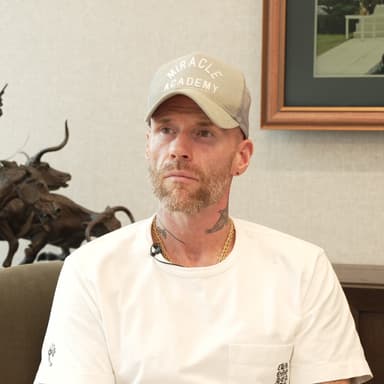
Oliver Trevena
Actor and co-founder, Caliwater
An actor's case for a Plan B
His reps dropped him for taking business meetings between shoots. Now he co-founds a cactus water brand with Vanessa Hudgens.
Where to watch and listen
“Sometimes when you have a plan B, it takes the pressure off plan A.”
Oliver Trevena says he was beaten nearly to death on a street in England at 21, and that the compensation, about £13,000, paid for his move to Los Angeles. He became an actor and a TV host, and when he started walking into business meetings between shoots, his reps dropped him and told him to pick a line. He did not pick. He now co-founds Caliwater, a cactus water brand, with Vanessa Hudgens, and his case for doing both is the opposite of the advice most founders get: have a Plan B.
His argument is about pressure. Walking into an audition needing the job, because it pays the rent or buys the house, is when you show up worst. A second income took that weight off, and he says his acting got better for it. Mike made the same case about founders taking secondary: nobody does their best work while gasping for air.
Caliwater was relaunched in 2021 with Hudgens, a friend of 17 years. Everyone told him not to do beverage, and he says every one of them was right about how hard it is. The investors he names, including Gerard Butler, Glen Powell, Cody Bellinger and Demi Lovato, put in their own money, and his line on that is simple: no friend gives you money for something they don't like. Retailers and friends kept asking for bubbles. They kept it still.
He built it slowly and organically. The old rule says a customer needs six to eight touches before they notice you; he thinks it is now 20 or 30. When he wanted to sue the third and fourth cactus water brands to launch, his lawyers told him that was the best news he could get, because no beverage giant creates a category. They wait to see how big it gets and buy one. Erewhon started stocking Caliwater before his own team knew, and the brand has since launched in Walmart nationwide.
What the conversation covers
A Plan B makes Plan A better
Needing the job is when you perform worst. A second income takes the pressure off the thing you love.
Dropped for doing business
His reps told him to choose between hosting and business meetings. Today every actor wants equity; then it made no sense to them.
Celebrity backing is not a favor
Gerard Butler, Glen Powell and Demi Lovato put in their own money. No friend invests in a product they don't like.
Competitors build the category
He wanted to sue the third cactus water brand. His lawyers told him a crowded category is what a buyer waits for.
Organic first, retail second
Years of word of mouth meant shoppers had heard of Caliwater before they saw it on a Walmart shelf.
Timestamps
Mentioned in this episode
Companies
Show notes
Oliver Trevena says he was beaten nearly to death at 21, then used the compensation to move from England to Los Angeles. He became an actor and TV host, and when he started taking business meetings between shoots, his reps dropped him for it. Now he co-founds Caliwater with Vanessa Hudgens, backed by Gerard Butler, Glen Powell and Demi Lovato, and it has launched in Walmart nationwide.
This episode is presented by Proppel. Hire A-player marketing and ops talent from the US and LATAM, and get 10% off your first hire: https://www.weareproppel.com/theadvantage
Follow Mike on Instagram: @mikewystrach — https://instagram.com/mikewystrach
In this episode:
◼ Why a Plan B makes your Plan A better
◼ Why no beverage giant ever creates a new category
◼ Why it takes 20 to 30 touches, not six, before a customer notices you
◼ How Erewhon started stocking Caliwater before his team knew
CHAPTERS
0:00 Hollywood to Walmart
1:11 Beaten Nearly to Death at 21
4:44 13,000 Pounds to LA
11:21 "Have You Done It Before?"
17:44 Stick Your Nose In
19:10 Why You Need a Plan B
20:53 My Agents Dropped Me
29:51 Everyone Said Don't Do Beverage
33:12 No Giant Creates a Category
35:19 30 Touches, Not 6
36:16 Erewhon Stocked Us First
43:28 You Have to Sacrifice Something
45:50 Final Thoughts and Wrap Up
Caliwater: https://www.drinkcaliwater.com
Watch on YouTube: https://youtu.be/yEIJgS4Rt34
All episodes: https://mikewystrach.com/podcast
Full transcript
Mike Wystrach in conversation with Oliver Trevena. Lightly formatted from the episode audio.
EP11 — Oliver Trevena v002: Your celebrity-driven brand, we're backed by everyone from Benson Boone and Gerard Butler to Glenn Powell, athletes like Cody Bellinger, Demi Lovato. You were an actor getting paid down this avenue and you started doing the side hustle. My reps dropped me. They were like, you gotta pick a lane. Are you doing business or are you doing entertainment? You must have a crazy schedule. As soon as there was another cactus water, like I was fine being the second, but as soon as there was three and four, I was on the phone to my lawyers being like, can we sue them? I've realized that it is somewhat hard to take care of my mental health and physical health. At the pace I'm going. How did you get beat up? 21 years old, walking down the street, I was left with basically no teeth, no jaw, nothing. Long, long, long time of surgeries and reconstruction and facial bone grafts and plates. It was the worst thing that's happened to me, but without it the best thing. Sometimes when you have a plan B, it takes a pressure off plan A. How did the idea come up? Did you come up with the ideas? Super excited to have you in today. Thank you, first of all, for making this happen. I know this was short notice, and you happen to be out here spending some time on vacation. So we we coupled this together really quick. I am super excited. You have a unique background, an interesting background. And you know, just in our brief conversations we were having before, I was like, well, pause. I want to get this on camera here. But so first and foremost, I I want to just hit a little bit of the arc because I think grew up in the UK. I the story I heard, and I wanna I wanna dig into this, but got beat up, took you got twenty thousand dollars off that that you got paid in a settlement, and then took that money to move to LA and come an actor. I mean, walk me through first of all, how w how did you get beat up? What were you doing? Was this a fight? That's I mean you you you you hit the points there. 21 years old, walking down the street. I was a theater kid. and I was about to leave on like a cruise ship tour. where I was gonna be singing and dancing for about six months on boats. And it was the Friday night and I was walking back after a a club and that was it. That was basically all I remember. gone back now and you know have a few flashbacks and memories from it. But yeah, I was knocked out and then just beaten to death on the on the side of the road. So stamped on my head, my face, I was left with basically no teeth, no jaw, nothing. long, long, long time of surgeries and reconstruction and facial bone grafts and plates and you know all that that comes with it. And long story short, you know, i I I talk about it now a lot. It was a part of my life that I really didn't talk about much because you know you kinda like hold in your secrets. Black it out a lot. Yeah. And and I didn't want anyone to know that my face was full of metal and I had about ten new sets of teeth. You know I mean I wanted everyone to think I was perfect. which isn't true. and I talk about it now just because It was the worst thing that happened in my life. Like, you know, I'm forty-five years old. If I look back on my life, it it was it was absolutely brutal. Like there were times when, you know, after the attack I'd I I'd I remember seeing myself in the mirror for the first time when my mum was pushing me out of the hospital to get some fresh air. And this was after like I was in intensive care, high dependency. So this was, you know, I I I hadn't been outside in a long time and I saw my reflection in the glass doors and I looked like a monster. Like I literally looked like a monster. My head was huge, the swelling and the surgeries and everything. and I went into like the darkest depression and and literally was like, what's the point in life? Like I was, you know, definitely suicidal. If it wasn't because of a strong family and a and and parents that, you know, stuck by me, I I don't think I'd be here. but I but I say I say all this now because of course it was the worst thing that's happened to me, but without a doubt, the best thing. Without that, I wouldn't have my life now. And that's just fact. I don't know what life I would have, it still might be amazing. And it might be something completely different, but the reason I'm sitting here in this moment now and the reason I'm living in America and the reason I have this success I have the way I have it is because of that awful attack when I was 21. that led me on this path. And I and I truly believe that. So I share it because we're in a world of, you know, I'm guilty of it. You look at my social media, I post all the good shit. You know what I mean? It's all the highlights of our life. It's all the perfect stuff. I try and get more authentic, but you know, sometimes you wake up and you feel like crap, you don't really want to say it on social media. and I think for younger generations, we're living in this world of perfection. Yeah. And then when things do go wrong or something drastic does happen, it's panic modes. You know, you think it's just you. You think your life is over, and it's not the case. It's not always the case that the worst things will be the best things. Yeah. But I've spoken to so many people from different walks of life all around the world, and it's crazy how much. it happens where, you know, you have this crazy moment in life, business, professionally, personally, that ends up being the best thing for you. So yeah, that led me to getting, you know, I got a bit of compensation money, which looking back, it's kind of laughable. Like I've spent a lot more on that fixing my teeth. but at the time it was a lot of money. I was a theater kid, you know, earning nothing. I think I was getting paid eighty pound a week, which is about a hundred and I guess with today's exchange rate, about a hundred and thirty bucks a week. And I suddenly had thirteen thousand pounds, you know, and that was a lot of money. Let me pause here for a second. The show is brought to you by Propel. They find brands like yours exceptional marketing and operational talent in the US, Latin markets, and beyond. For now, the links are in the show notes and all of our listeners get ten percent off your first hire. Okay, let's get into it. And I didn't really want to be in England because I loved England, but at that point in my life I was really just not comfortable there. I was scared. And so it drove me to get out of my comfort zone. And and move to America and and give it a shot of the American dream. Cause I think that's like that's always the challenge. I mean, now as a parent too, I I struggle with like 'cause I think this like the saying of like with great pain comes great enlightenment. Yep. And like with great suffering and those things is like when you get out the other side. And I can imagine, like, as an actor, you know, I would imagine not being an actor, but the rejection is really hard in acting. But once you've you come close to death, like Now it's no longer like the worst thing. It's like it's kind of I mean, it's funny you say that because trust me, I still sweat the small stuff. You know what I mean? It wouldn't everything you're saying makes sense. I mean, yeah, as an actor, you know, any part of entertainment, model, acting, singing, whatever you choose, you know, you're based someone else's making the decisions for you. Yeah. And kind of validating you, which is dangerous. You know, as soon as you put it in someone else's hands, it can get tough. And so I think, yeah, there was a definitely a chapter for me where I put so much worth on, you know, what other people what other people thought of me, you know, my success outside. and you have to get to that point where you're like, all right, if it doesn't go my way, it doesn't go my way. And I think that translates into any business, right? Like if you're on the stock market and, you know, it's this up and down world that we live in, if you can detach, to me that's when you're in power. You know, if you can really emotionally not make any decisions or reactions de pay dependent on what's based out of your control. Then you're in a powerful position. And I think there's at least for me, my my development as a human, I would say, is like morphing some degree of like like Buddhist belief that like the power is in enjoying the process, but also like really enjoying the learning of like, so like I I went from like fundraising is the only thing I can say is kind of close to kind of like the acting. My brother's a musician actor, so I gotta live vicariously through his stuff. But But it's rejection, right? You're asking someone for something and people say no. And so like Or they say yes and then they say no again. And then yeah, I mean it's a it's a but what I realize is like, okay, well I could either get look at this as binary and every no meant failure, or I could look at this and be like, no is no is part of the process. And so what I'm trying to do is every every time I go into a pitch is like being like, how how do I how do I grow and learn from this? So where is the information? How do I get better at this? So I started really just enjoying the process. And I love fundraising now because I just enjoy the process. And I'm like, I'm super analytical when I leave. And I'm like, did I do a good job? Did this? I always get feedback. And I've 'cause I realize, and now I'm on the other side, I realize like it's kind of like like dating or anything. It's like in order for things to happen, it's like magic kind of needs to happen. Like yeah, which is I imagine the same thing for like like being an actor is like, not only do you have to do a good job, not only do you have to be right, but you have to also be right. For what the director's thinking. And so like you can't control that. Like if the director's thinking so much out of your control. And it's the same with fundraising. Which is generally life. It's like there's so much that like, and all you can do is just continue to be like, I'm gonna enjoy this process. I'm gonna get myself Minecraft. But so let's keep digging in because I love this. So you come to you come to LA, you're like, You're a theater kid, you're like LA I have to think is like coming from the UK is like the pinnacle of like, okay, let's go. I mean it was amazing. It was it was also very different twenty plus years ago because Yeah, w when is this? When it gives me a this is now twenty three years ago. Okay. Yeah. but there weren't a lot of Brits there. So it was perfect for me. I stuck out, you know. I remember I remember walking into a Starbucks and being like, Can I get a cappuccino? And then being like, my god, where are you from? It was like perfect. Yeah, yeah. now, you know, there's Brits on every corner. We're not special at all in America. But yeah, that was it. It was it was truly the American dream. I went I went in with excitement, you know, I didn't really know anyone, but I met people very quickly, and just fell into like the bubble of Hollywood, you know. Like I was I was meant to do music first, I had a deal, a record deal. I kind of, you know, got very bored of music quickly. Not because I didn't love it, but I also like knew that I wasn't It was kind of like the pop days and everything was like auto-tuned and I like, I'm I ain't great at this, you know. I mean, know your limits. And and then I just, you know, I wanted to be there. I wanted to get into other aspects. I was Do you think you were always because it does sound like you're willing to try new things? Like, do you think you've always been okay with like I would say like failure just trying new things and I mean you yeah. Did that come from your parents or what what did that cut like do you think that was the way you were? My dad my mum and dad are very resilient. They s they've they they came from nothing. I have three older brothers. they built built things together, lost things together, got back up and rebuilt them together. And I think when you witness people going through that and you see that you can lose everything, bring it back up, lose, win, you know, it's that mentality. It's also like being an athlete, you know, it's the same thing. You lose a game, you get back up and you win the next game. so there was definitely an element of that that played into it. But yeah, I mean I've always been there was a manager that first signed me in the US called Dick Scott and he was a he was a a brilliant man and he was very a pioneer in the space, like he managed Mark Wahlberg when Mark was Marky Mark. So he was the guy that, you know, took Mark and made him a a a pop star, but then also said you should do the cover of, you know, you could be the model for Calvin Klein. And then also you should act in movies. So he had always planted that into me. Like immediately when I was doing music, I was also modeling. And then immediately when I was modeling he had me in acting school. Like so it wasn't he was never like, let's pick this lane, focus on it and go down it. And so a big part of that was You know, I was like, I'm in America, I can do anything. And I I I and no one ever told me any different. And I think that was a blessing for sure. and then that was it. I started to go down that road and then out of nowhere got offered like a a T V hosting gig, which, you know, doing what you're doing now and I like, Well what does that mean? They're have you done it before? I'm like, Yeah, of course, done it loads, complete lie. and then I was on a red carpet interviewing people and then that went into like having my own show and then doing all the big award shows and you know, met so many people and so I think Every chapter, I mean I've had I've really had a lot of chapters. It's crazy. I mean, obviously, you know, that comes with age as well. But I think when you're open to it, life will give you it. You know, if you and and and I s talk about this a lot when you mention like Buddhist and and that, you know, that part of life. There I I find there's always a big confusion when you mention like Buddhism or spirituality to people, because I have it, you know, when I'm when I'm talking to younger people and and friends around me that I'm trying to like give some advice to. They assume that that means going to sit on top of a mountain, you know, meditating every day and and just being at peace and not, you know, not chasing anything. I don't agree with that. I think you can have today's world, you can still live a peaceful life and a spiritual life. You just have to be detached from the outcome. So I I believe in waking up every day doing the best you can do. Like my my my way of life that I would love to live every day, and I don't live it every day and I don't live it perfectly. But if I had my dream. I would love to wake up every day, do the best I can do. I love my work. I love the hustle. And then let the rest go. And and understand that whatever God's universe, whatever your beliefs are, if you're doing the best you can do, you'll get what you what you get. You'll get what you deserve. And and and whatever that is, that's it. And you have the acceptance that that that's what it is. And that's a pretty most people that I know that live in that way of life and and live in acceptance are the most Present, happy individuals that I know. And they get through trouble and and hard t hardships quicker than most. I couldn't agree more. I I think like I always like I think there's a difference between spiritual and religious, but I think when you take all of the religions, everyone, they all have this aspect of meditation. Of and then also this idea that something's bigger than you, there's there's you're not actually that significant in the world. And you know, I love like the Buddhism and the Tao and and these things is is like how do you how do you connect in the present? How do you just try to get better at what you're you what you're doing? The game is I always say to people like the game is the game, but like at the end of the day, the the destination doesn't actually matter as much as you think it does. Cause you get there and then it's like, it's fleeting. Of course. It will never it will never end. The destination will keep you'll keep changing the goalposts. But you have to enjoy the process because the process is the thing you fall in love with. Like the and and then and then yeah that but I was thinking people always say like you know it is that hedonic treadmill is like the the next thing. I think the the key for me has been like try to move the next thing not necessarily into being a taker but being a giver. And like how do you how do you translate the your second chapter into like how do I give back? Like because I think you can do the hedonic treadmill like because I think humans are innately goal seeking and the the the minute you get here you want to go there. The question is is what is what is this in? Is it like I okay, I wanna buy something nicer, bigger, I want a bigger house? Well the the hedonic treadmill when you're doing it for yourself, I've never seen it end any other way than just lonely. Yes. Right? You you can end up with all the things. Yes. The boats, the cars, the planes, the whatever, but it's pretty lonely at the end of that. And the things Whereas if you're on the treadmill and you're you're you're implementing give back, it's a pretty full life. So I always say like in a selfish way Even if you don't think you want to give back, give back and it will be better for you. Yes. Like ultimately you give back and you get more back as well. 100%. There's nothing more selfish than giving. Yeah. Because to your point is that like you are the biggest beneficiary of giving. And so I just think like it is, it's always changing perspective. I always think like the world doesn't actually change that much. What changes is your perspective. And so it's just constantly changing your perspective on to like, you know, how do you want to exist, what games you're playing. and then, you know, I always think like there's getting better at the craft. And if you're a basketball player, then it at the end of the day the the goal is to win the championship. The goal is to score more points. so you got to know the game you're playing and what the scorecard. But at the what you really want to do is say, I want to show up and be the best I can be on the and every day get a little better for me. And hopefully If I do that, my teammates do that and everything, we win the championship. But even if not, I know that I'm out there giving it all. Yeah, and then let the rest go, right? Like I just I just vision like a basketball player that's like the best player and plays, you know, so well every day and trains so hard every day. But if they lose or they mess up, they're beating themselves up all week, that's a f that's a shitty season. Yes. You know, there's no fun to that. So it's it's for me it's about letting the rest go, you know? And and I need to hear that myself every day because it's like you sh you wake up, you do the best you can and let the rest go. Doesn't mean you wake up, you relax, you do free yoga classes, you meditate five times a day, and then you expect the universe to give you massive success, because there's plenty of people like that as well. That might if that genuinely works for your lifestyle, I'm all for it. But I don't it's never been that way for me. It's like I have to wake up and hustle, and that's how I get my success. It's funny you say that, because like I always tell Like I'm like, look, and or when you're doing social media podcasts or writing, you kinda have to write in like a black and white, because when you're given advice, you can't be like but then the reality is it's like nine out of ten times I need the advice and I need to keep hearing it. and it's just like but I've also get gotten a little better about giving myself a pass of being like, you know, it's like I'm never gonna show up perfect and no one is. But like how do you just get back on? How do you keep going? But let's so I wanna dig in because I think this is the the really fun part. I think so you catch this early success. But like and I wasn't even aware, but you were just telling me before this, 15 years ago, you decide like, okay, I'm now getting this platform. I now have, you know, followers, I'm making some money, and deciding like, okay, well, I gotta start thinking about how can I make money in different ways, I'm assuming. But walk me through kind of like as you get into kind of now thinking about like I wanna start building businesses, investing in businesses, transfer from like Y y your business as an actor is is you. You're you're getting and then now you're saying, Okay, well how do I how do I monetize me in different ways? I think just by probably just by sticking my nose in. Like I was I was I as I said a long time ago I was modeling for brands. and there was a brand I was modeling for called All Saints, which was s one of my favorite brands ever growing up and I'd found myself in the mix with the ownership group and everything else. And we kept talking about bringing it to the US. And then suddenly just because I stuck my nose in and I was having more conversations, I started to get more involved and started to get, you know, become part of the brand. And and and you know, instead of just sitting on the sidelines being like, I'll take a picture, you you get involved. And I think that's the key to success as well. It's like not in a rude way, but like there's always, you know, you start with this door, there's always a couple more doors off to the left and right that you could probably open and might lead to something else. I think it's just being more open to it. And then that led me into then, you know, realizing in the business world, because I didn't go to business school or anything like that, but in the business world, when you did X, Y, and Z, you saw return. In entertainment, still a massive element of luck. You know, for some people it just happens overnight. Some people you're like, hang on, I did X, Y, and Z and I still haven't booked a job in a year, you know? And so I fell in love with the business space because of that. And then the more I more I went down the business path. The more I found that I enjoyed entertainment because now my entire life wasn't, you know, on my shoulders because of entertainment. You know, I could support myself and and that took a lot of pressure off. Because when you walk into an audition and you walk into a door and you're, you know, you're down to the last three and you're craving that job because you know that suddenly that job means you can buy a house or pay your rent or buy a car, you know, there's a lot of pressure on that moment. And so when you remove that and you've got a plan B, Your plan A benefits. Because that's where I disagree with people who always like, you gotta you gotta just pick a plan. There shouldn't be a plan B. Don't have a plan B. Just pick a plan A. I'm like, well, no, because sometimes when you have a plan B, it takes the pressure off a plan A, you get to do a better plan A and show up in a better way because you're not carrying the weight of the world going into those doors. I could not agree more. I mean, that's been my biggest argument with founders taking secondary. Yeah. And some old school investors would be no, no, no. You gotta have them like barely able to, like, they've gotta be so hungry. And I'm like, Tell me a real life situation with that work. Like it doesn't, like people like when you're high stress environments, you don't show up as your best. When you're like, you know, I always tell people like you're the most attractive when you're in a com in a committed relationship. Why? Because you're not actually trying to get anyone, like you're not like you're the worst when you're like, I need to get a girlfriend, I need to get a boyfriend. So like I just feel like life is that when you're putting out positivity, confidence, because you're like, if I get this job or not. Yeah, yeah. And then I I would also imagine. you're more likely to choose jobs that you're truly excited about. It's like that self-fulfilling is like you're no longer just doing it for the paycheck. You're able to be like, no, I really want this job. So that excitement leads to passion, energy that shows up. Of course and then other doors open. I mean, you know, looking back, it was, it was a, it wasn't like the industry is now. You know, like you look at the industry now and every actor, every model, every singer, they they, they, they have some brand ownership. They wanna, they wanna be the face, but they want to own something. That was very different. When I was doing it, it was like I my reps dropped me. They were like, you gotta pick a lane. Are you doing business or are you doing entertainment? Because you're hosting a show and then you're rushing into these business meetings. I'm like, that's what I wanna do. But it was crazy to them at that point because it wasn't it was unheard of. It was like you would you would, you know, film a movie and you might get paid to do a campaign shoot, but why are you gonna ever get involved in the business in an ownership level or as a shareholder or as you know, it's like it didn't make any sense. Now of course It's all that makes sense. I think people prefer it, you know. People want to be part of the story as opposed to just taking a picture, slapping their face on something. and so that imagine back then as well, like all of your agents, all the people making money off you, like if you like that was like, Well, wait a minute, we're not me is kind of self motivated, like So I'm not saying that's the case with all agents 'cause just take the time. Some of them are incredible, but like there's a control aspect, right? Like they control you, they make the decisions for you when you don't have your own success, you know? And so I think When you embrace your own power and you start to, you know, paint your own future, more success comes because you're not panicking, you're not rushing, you're not stressing, you're not waking up every day feeling like you're on your back foot, you know? You're not gasping for air. You can really make better choices. And, you know, looking back, so many of those doors that I went through and and and took a gamble led to another door. You know, maybe, maybe going into that door in the beginning looking back, maybe it wasn't the great right door. But that's how I got to the next door. You know, it's like I said this to someone recently, it's even like friendships or or not friendships, acquaintances. Like every time, you know, we've met through your life, you meet some incredible people and you meet some shitty people, right? That's just the way of life. Let me pause here for a second and introduce you to our title sponsor, Propel. Every business I've built has had a huge, huge, huge piece with international talent. And as we started building the advantage We wanted to bring in international talent focused around media, podcasts, and we started doing a lot of research and we came across papel. And we were really excited first and foremost to use them for us. And we later reach out as a sponsor. Here's the best part it's all performance based. You only pay one off fee once you actually hire someone. That means no retainers, no ongoing costs, plus every hire comes with a three month guarantee. I think bringing on international talent is really hard, really rewarding. As we all know, bringing a talent onto your team is the most important part about building a business. And with Propel, I can speak for ourselves. They have been a huge part of our ability to recruit great talent to our team. Every advantage listener gets 10% off their first hire. For more information, check out the show notes. Even the shitty people that I've met, every single one of them, if I go through our chapter, there was something good that came from it. Every single one. Either something good or someone good that I wouldn't have in my life if it wasn't for that shitty person. Yeah. Even though my mind wants to say, my God, I wish I never met that person because they are just so wrong in so many ways. You look at it and you're like, Yeah, but I did, didn't I? Damn, I met that person through that person and I love that person. And that person might not be in my life if I didn't go through the drama with them. And so that's how I find like even in trying some things, even in trying some business ventures or Or found in something that might fail, there's always either a lesson or there's someone or there's an experience or something that pays a massive aspect in your life moving forward. And I think that like you nailed it and you're obviously very good at it, but your perspective to see search out the good in situations, like you can tell how that reverberates through your life, because like a lot of people just they seek out the bad. So like when you have a shitty person, you could name the fifty-five bad things and this and this, this. But if you actually focus on the good thing, then you're like, well, it makes you appreciate that like you gotta bring people into your life. Because even when you run into shitty people, they're actually still net beneficiary. And I think like that's I I I constantly tell people like I'm a you tell I'm a glass half full guy. Like I'm just like, hey, everything's an opportunity. I I I always my teams are never allowed to use the word challenge. It's always opportunity. Cause like it at the end of the day, it's like, You're gonna face a problem, you can either see this like a challenge, or you can say, like, this is an opportunity. Yeah. Here we go. And I think like your point of like when you when you face adversity, when you face, you know, shitty situations, and you say, Well, what good came out of that? It makes you more willing, more excited to like go into challenging situations. But I also think you hit on another thing, which I think is really key to our listeners, is that like the side hustle is an opportunity. And it never is like Guaranteed that it's gonna pay off. But like you were an actor getting paid down this avenue and you started doing the side hustle. But like we were talking, I was like, man, you got you must have a crazy schedule. And you're like, you have no idea. I got like so like there is a cost to there's definitely a cost. And I will say, just to be completely transparent, as of late, I've realized that like element of it, it is it is somewhat hard to take care of my mental health and physical health at the pace I'm going. You know, and you try and find, you know, you try and find people on your team. It's tough. It's tough to find people that care as much as you do, that want your success as much as you do. I think the world's changed a lot. I think back in the day, and I don't keep wanting to talk about the old days, because that's that's annoying, but you would start a business, you would find people that you would give jobs to and they would be so grateful and they would do everything they ca they can for your business because you've put a roof over their head. Now the response A lot of the time is like, it's your business, ain't my business. Why am I gonna wake up at seven when I shouldn't w when I'm not meant to start till nine? Like no you know, like there's that difference in mentality, but there are also amazing people out there as well. So it's about finding those people and then, you know, for me trying to find a bit of better bet better balance because as I said to you, you know, I'm I'm in real time deciding whether I'm gonna do this movie in Malta. I haven't really been home since April. I did a movie in London, went straight into business things all over the summer. And now and travel and Is that movie the one that's gonna get released in December? Is that No, no, different the the the movie that I just finished will come out next year and then the one that is in Malta we haven't even started yet. So that'll be at least another I mean, on on a quick scale, eighteen months before release from the time you finish, but normally about two years. And then I just saw a trailer for a movie that I think's coming out in December. Liam Neeson? yeah, yeah. they changed the name of it. It was called Hotel Tehran, but now I think it's I saw it. I think it's called The Hit. Okay, it's called The Hit now. I think I don't know. I should know. This is the this is the problem as well, is I genuinely act because I love it and I let it go. Like I forget. Like people would text me now and be like, my god, I just saw you in this, you know, there's a movie with Mel Gibson that came out. They're like, I just saw you in this Mel Gibson movie, and was like, I had to actually think, when did I film with Mel Gibson? And then I remembered it like two years ago and I did this movie and it just came out. But I think that's the magic as well because you don't hold any yeah, you don't hold any weight to and that industry's changed, you know, the you never know if anyone's gonna see it. So my twin brother is a decent sized musician and the lead singer of a band called Midland. But I remember like when like not too like I don't know five years ago when he would be on like today's show or tonight's show, everyone would be now it's just kinda like, I don't even pay attention. It's like you you kind of get numb because like your your life just kinda keeps moving and these things. But it but the juggle gets hard, 'cause like, give you an example, if I'm filming in Malta and then the time difference, I I you know, I value I think when you when you've found companies and you take outside money, you owe your investors, you know, a great deal of not only respect, but you you know, you owe them to give you your your responsibility and do the best you can. And so that sits with me every day. So I'm never the guy on set that's like, I'm finishing my scene and rushing back to the trailer. To go. To go do my work. And then, you know, sometimes I definitely have had a few cast members be like, You're so unsociable because I'm not the guy going out for dinner straight after we wrap. You've like you I've got I've got things that I need to do. So there is that element that I'd like to find balance. but I'm in I'm in the prime of my kind of life as far as business and things, and I'm not, you know, hopefully sell a company or two in the next, you know, year. and then that frees up, you know, time. So And so let's walk through the most recent one. Which is Cali water, which is yeah, I mean it's it's seems to be give us the background of it. I did we we did it, we booked this two last minute. Get it. we should have had it in There's a pure vita down the street. I should have grabbed some of the right. We're gonna just edit in some Cali water in here. I now just drank some. Cali water is you know, y years years ago people said to me I had the idea to start a beverage and they like, Don't do beverage, it's it's a it's a pain, it's difficult, it's one of the worst industries. Every one of was right. It's beverage is tough. but I think like anything, any business when you really focus on the quality of the product and what you're building, you can you can break through. And that to be honest is why Cali Water is broken through. we're obviously a celebrity-driven brand. Me and my co-founder Vanessa Hudgens, we launched it together, but we're backed by, you know, everyone from Benson Boone and Gerard Butler to Glenn Powell, athletes like Cody Bellinger, Demi Lovato. you know, amazing, massive names have all put their own money in and they all back it and people are always like, my god, you have incredible friendships and and that's true, but no friend is giving me money for something they don't like. Yeah, yeah. So the product has to speak for itself and and it does. It's a it's a cactus water, made from the prickly pear fruit. so y you know, we mark it as a hydration, super hydration beverage, half the calories, half the sugar of coconut water. ton of great health benefits but the the taste is I mean I obviously I love it but that's my favorite thing I mean I travel with it I take it around the world I'll always pack a few cans and in the most random scenarios be like I'm in Thailand you want to try caliwar and people that try it from different walks of life are like my god you know I love it and and I think time it as well you know when we launched the brand a few years ago everyone and I mean everyone like not just the retailers but even just friends were like my god I like it but it'll be great if it was carbonated. You know, everything e that's all everyone wanted. We stuck with our our drink and it's not carbonated and now I think people really want something that's not carbonated. You know, especially if you're eating or you just finished a workout. You can't you don't want to chug a a fizzy drink. And so timing, like you know, in any business, plays a massive factor and I think we're right on the pulse. Hydration is, you know, trending right now. It's a massive massive space. so yeah. One I you know, product is key. My co-founder's incredible. She's been you know, we've been friends for seventeen years, we've been through so much together for How how did that how did the idea come up? Like we're like Walker did did you come up with the idea? Did someone else come up with the idea and come together? No, it was like I mean it was a it w it was me and me and a friend and and Vanessa is kind of like a a brainchild in a way of all of us, you know. someone started it, we piggybacked off it and then just realized that cactus in general, you know, hadn't been tapped into. Yeah. You know? And also people kept telling me, you know, friends of mine had invested in coconut waters and kept telling me like the supply chain was just a mess. Yeah, yeah. and cactus, you know, lives in so many, I don't know, exactly maybe 42 countries. Like it's it's all over the world. it's sustainable because the prickly pear drains its juice and that fruit just keeps growing. And so there were many factors that made me think, could this work? There was one cactus water on the market at the time. and I tried it and I was like, you know, not to be negative, but I was like, I we can do this better. We can do better branding, we can do better taste, we can do so many things better. and so we took the gamble and now there's I don't know how many there is now, like five, six, Well I also think like especially so I grew up in Arizona, so I I've had I've had the prickly pear and like that's a big thing in the desert, like cactuses, everyone knows the cactus. But I do think one of the things that I think often investors get wrong. Is that when you're introducing a new product class, it actually benefits to have multiple players. Of course. Because I made that mistake too, by the way. As soon as there was another cactus water, like I was fine being the second, but as soon as there was three and four, I I was on the phone to my lawyers being like, Can we sue them? Can we do and they're like, no, this is amazing. And especially in beverage, because what I found out and what I know now is no leader ever creates a c a new category. Pepsi, Coca-Cola, Dr. Pepper, Nestlé. No one ever creates a new category. They wait, they see how big it gets, they see how many players there are, and then they scoop one up. And and what you and what you really need to do is this is all I always tell people is like it's super hard to educate the consumer. Yeah. So and really expensive. So like when the consumer like when we started freshly, everyone's like, the space is crowded, which it kind of was, but It was fundamentally changing the way people were buying food, which they were now willing to get fresh food delivered to their house. So there was Blue Apron, HelloFresh, slightly derivative Cars. And then to the point though is that like now you have this massive amount of consumer dollars coming. And I think that's the same thing with like cactus water, same thing what happened with coconut water. Is that no one's drinking it. So you you gotta get people to say, like, hey, this is actually a cool product. And so they hear about it five, six different ways. And then you create this massive. huge TAM and actually everyone benefits. Yeah. And that's where I always say, like, you know, I grew up in Arizona, as I said, and like I had no idea that Pull and Springs water existed 'cause it's primarily northeast. You get up to Northeast and all you see is Pull and Springs. And it's a multi billion dollar piece of it, Nestle I think now owns it. But like the water category, but I I I mean I think hydration, I think cactus water is gonna be a big huge category. And I think You guys are early movers. You built in a phenomenal brand too. I I mean that's I think the product's great, but it also the branding looks great. Well that's a a big part of what people told me about beverage that was, you know, that's why so many beverage brands are upside down, right? That's why Prime has gone up and coming down is the the amount of money that people throw at it to get it out there and and spend on it and it's it's always backwards. You know, we've played the long game in the way that our marketing has always been organic. We've always just spreaded the word, spreaded the word, spreaded the word. And I remember early on people would say to me, you know, you have to touch a consumer in CPG or or anything six to nine times or something like that, six to eight times before they pay attention. I think it's way off now. I think it's probably twenty, thirty times because we're all saturated on our phones of what we see. You've got to touch them, you know, keep, keep, keep pushing. And I think with us, it's been a few years of just pushing, pushing, pushing, pushing. That now finally when we're launching like you know, Walmart nationwide and these big stores that years ago people were like, Why aren't you in Walmart? You know, th it's like day one that friends or, you know, possible investors would be like, Well, I like the brand, but why aren't you in Walmart? Why aren't you in Whole Foods? Why aren't you in and I think it's a blessing because now people see us in a Walmart and they're already going, I've heard of this. You know, you're not you're not on your backfield. Your velocity number Yeah And so our velocity's there and that's where like You know, we're getting the expansions, we're getting the the pickups, we're getting now like, you know, it's incredible for me. I had a I had a moment the other day where a friend literally sent me a text and was like, hey bro, I just it was actually a friend of mine's kid. was like, hey, I just grabbed some air one, some caliraw Air One. And I was like, I literally messaged the team and goes, I didn't know we were in Air One. And and one of the team members was like, I didn't EBA and it organically got picked up. I remember banging on their door, being like, Can you stock us? So it's a good sign when people start to pick you up because now people want it, there's demand for it, people notice it, you know, it's it's it's a really it's a really good thing. But it took time to get there. Yeah. And I think in today's world, because you know, when you pick up the news and you see that Poppy sold for 1.9 billion, everyone assumes that it was 12 months. Yeah. You know, they don't know the backstory. I think Poppy was like 10, maybe 10 years or so. Yeah. they don't write about that. The just the headline is Poppy sells for 1.9 billion. And then that puts the pressure on the other brands because everyone's coming to a U being like, when are we selling? When are we selling? It takes time. And that's a to do it the right way. I mean, so as when we started, so I started a venture capital firm in CPG, because I ultimately, my perspective as a two-time CPG founder was that like the problem is is the way venture capital was coming in CPG is like it was trying to get everything to go like this. And like mo consumer brands really have like a natural cadence. Yeah. And If you try to grow too fast, and that's where I think like Prime and these guys get in trouble, is like you basically outstrip your actual target. And what you really want to do is like you want to go find for any brand to like truly succeed, is you want to go find champions of that brand that innately come to that because you are solving some problem that they were looking for and they become the champions and they tell their friends and they're the influencers and then they tell and so. Before you know it, like you've got a very natural audience who's coming to you because they're like, I want hydration. I think this is a better and For us the kids market has been exactly that, because we weren't gonna launch kids' products. It was never part of our our vision, our journey or anything. But we kept being told by parents that their kids love the drink and they were pouring the can into like a sippy cup. And, you know, trying to get kids to drink something healthy is tough. Yeah. and so with that we've just noticed like parents Telling parents, telling parents, like, you gotta get this because kids love it. You know, kids like drinking it. And then, you know, I witness it with my own friends' kids where they're like asking for Cali water. That's a good thing if you can get a kid to to ask for something healthy. And I think that's the way the world's shifting a bit is like we don't have to, you know, you don't have to it's like that guilty pleasure, right? Like you you've been told or we've been accustomed to un to think that things we enjoy are bad for us and that's our cheat. That's our guilty pleasure. We wanna create health now in a way that that's still your guilt protection. Like you can still enjoy something that that tastes good that's good for you as well, you know? And I like again, NO1, I would just say like the I think the other problem is like, you know, I used to call it the tech crunch, but it's not now it's broader media and it's more in but back when I started freshly, every every time all you'd read is the headline, the article. this company raised it this kind. So you're always like, God, what the hell are we doing wrong? Like we everything's like nothing's working. Then you actually start start talking to founders and you're like, it's all bullshit. Of course. It's and and so like and like I always tell people look, look, every day someone wins the lottery. But if you're gonna base your your whole financial freedom on I'm gonna win the lottery, like but like the tried and truth of these brands, if you build and you think long term on building a really solid product, really solid, like you're gonna create a highly successful company and but it takes more t it always takes more time than you think. It always takes more time, more money, more ethics. Yeah, and it's and it's just like But like don't compare like I it's just t tell people expand the horizon a little longer. crazy you've I didn't realize you founded two CPG brands. You kept your hair. I lost mine. Well so you wasn't stressed enough. Mine went to I it every I love I always tell people it's like, look, I love high stress, high it's what I thrive on. Yeah. And so but I also have gotten better with and the second one's a lot easier because like I now got some money in the bank, which makes things a little easier to like handle the the the lows. It's still it's still hard. And I always tell people, but we went in to four wall consumer services into veterinary medicine, which is hard in its other aspect. But I always love like I scratched my own itch. So I started freshly because I was like, I want to eat healthy, but I hate cooking and I didn't want to know anything about nutrition. And it's like there needs to be a service that just ships you healthy meals. And there were, but they were you had to do all the cooking. I'm like, I don't want to cook. Like why do I want homework at the end of the night? It's like So we started making it and it was like I always feel like then people were asking me because to to do it and I was like, okay, I'm just gonna do this. And we never I mean, I think to the day we sold it, we never felt like we fully figured it out. We were always like, okay, like that was a ton of fun. And then veterinary services, I bought a I bought my I grew up in a ranch and I bought a dog in New York and I go to the vet and it's like the worst experience I've ever had. And I'm like, this is New York. I've like New York has New York has a lot of problems, but New York generally has the best of of like whatever it is. So I call my sister, who's a 30 year practicing bet, and I'm asking all the questions. I'm like, this is horrible. And she's like, I have this vision. And I'm like, Yeah, that's what I want. And I'm like, why don't we do this? I was like, I've now got some money. So like we set out. So the great thing for me is like I've been the enabler on this one. It's really her vision and and so and she's also like I kind of like being the guy behind the scenes. But it's been a lot of fun. It I mean now it's also been a whack-a-mole problem which you have every day. but then in CPG, what I saw is that I was like, I you know, from venture, and again, I've always put myself in this arena. I raised 300 million. But what I also saw is that like no longer were most venture investors actual operators. So like they were just bringing capital, but like a lot of the times is like not that they meant to, but like the advice wasn't like that great. So on the second like, so I was just like, man, like. I want to build a venture firm that is. And also I felt like everyone's going for the home run. Right. And so when you layer that on, and every product has to be a billion-dollar business within, and venture funds usually need a 10-year horizon. It's like it pushes most of these businesses to like failure. And I was like, if you just extend that horizon, and so you know, we try to come at it different. We're having a lot of fun. We're learning a lot on that side too. But like I I love I love the consumer space. I think I also I I know people are negative sometimes on on Gen Z, but I love being around young founders and I love the energy and I love just like, yeah, how how guy how they're doing stuff and it's it I think it's like the best time in the in the world to be starting this. I think people realize as well, going back to what we said at the beginning, is there is opportunity out there, you know? And I think people realize now more more than ever that you can do it, you know. Yeah. And then I think like The more people see different stories of different approaches and how you get in there. And I always just like the reiterated message I always say is like, look, it doesn't mean it's easy. It's hard. And if you want to be successful, like as you said, there's this constant battle of like You gotta want it. You gotta want it. It's hard. You gotta want it. I've had friends that, you know, I've invested and put money in, and and once again, no disrespect, but they're doing, you know, they're hiking Runyon Canyon in LA three times a day and they're doing a couple of yoke and glasses, and then they call me at the end of the month being like, I think we need to raise more money. And I'm like, nah, nah, you gotta you gotta sacrifice something, you know? Yeah. and I hate to say that because some people would argue with me and say, No, you can have it all. I don't think you can. As a founder, you you give it up. You know, I miss I miss miss playing football as much as I used to. I miss so many things. But because of being a founder and because of now success, I get to live a bigger life in other ways. But you have to want it enough To go after, especially during those first. Well, I listen to this. I was listening to this podcast. Lex Freeman just had I mean I'm not even gonna try to pronounce his last name, but ka ka Kabib, who's the UFC fighter. Okay. Khib, I don't know his last name. we'll link it. Lex Freeman's awesome. But basically it's like this is why I always link things to sports, because if you give the analogy in sports, people immediately get it. Yeah. But if you want to be the best at sports and you're like, I wanna make UFC, I wanna make pro basketball, I wanna make pro football or s soccer. Like and you'd say, well, how do you do it? Well, I'm I'm gonna I'm gonna practice like an hour once a week. Everyone would be like unanimously like, not gonna happen, bro. Zero chance. If you wanna make if you wanna be the best, you have to live and breathe it. You gotta live and breathe it. And that's all I always say is like when you look at now the good and bad about starting businesses, it's easier than ever. But I think the problem is just to just to push back there a little bit. On business and athletes, is there are some times in business when it just goes. Yes. I don't believe that's the case with being an athlete. I think most athletes have lived and breathed and worked their arse off to get to where they are. They didn't just wake up one day with an idea and it go viral and they end up with a unicorn. You know? Well, the only and the only thing I will say is some people are just innately skilled and talented where they don't have to work as hard, and maybe that's the the the unicorn. I was just given given the rap here. But but hard work is it. How is that well so we're gonna put all your links, we're gonna put everything in below. How how else where I mean follow you on Instagram? Your Instagram is great. Okay, just me and my dog. We're gonna have your link. Where else can people follow? A few movies coming out, or the one that you said that I forgot about. Yeah. I think that comes out in September. We find out the correct name of it. Okay. With Liam Neeson, who was incredible, love him to bits. and then yeah, a couple more movies next year coming out. Well this is awesome. I really appreciate it. Thank bro. Congrats on all the success. Thanks for making this happen. All right, appreciate it. man, that was so great.
Get the written version
Every week Mike writes up what he's learning from these conversations and the companies he's building. Free.