Double or Nothing at the Pool Table & Rehearse the Failure Before You Quit
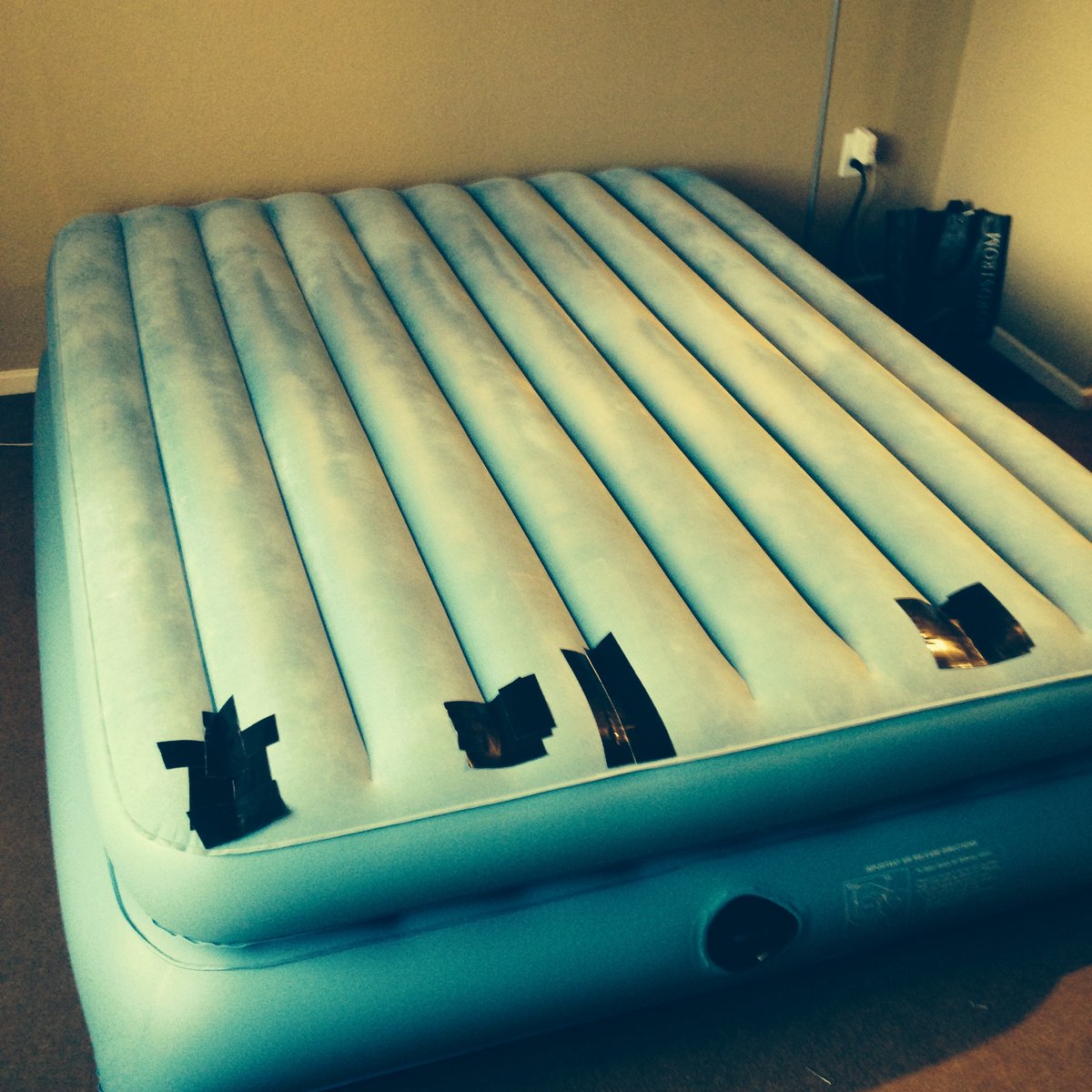
My Freshly co-founders and I told the whole story together for the first time. It started with a duct-taped air mattress.
THIS WEEK'S THROUGH-LINE
Write down the worst case. If you can live with it, start.
Welcome Note
Thanks for reading the forty-fifth issue of The Advantage. This one is brought to you by Proppel. Details on Proppel and the discount for Advantage readers are at the end of the newsletter.
Carter Comstock, Alberto Lopez Toledo and I built Freshly into the third-fastest-growing food company to $500 million in sales. In 2020, Nestlé bought it in a deal that valued us at $950 million, with earnouts that could take it to $1.5 billion. By then we were shipping more than 1 million meals a week to customers in 48 states and had shipped nearly 100 million meals since launch.
If you have a steady job and an idea you keep putting off, this one is for you. This week Carter and Alberto came on the show. Carter quit a good sales job at ADP to cook meals with me at 2 a.m. Before he jumped, he ran the exercise that is this week's Practical Edge. Steal it.
If you are a founder doing $1 million to $40 million in sales and thinking about raising, reach out to us at Cutting Horse. Whether you want an investor or just advice from people who have been in your seat, we are glad to talk.
Let's get into it.
WORTH WATCHING:
We Did Not Know Any Better
The Advantage · Mike Wystrach × Carter Comstock & Alberto Lopez Toledo · 97 min
Carter Comstock is my co-founder. Alberto Lopez Toledo was our technical co-founder and CTO, and is now CTO of Cityblock Health. We had never told the Freshly story together, and we each remember it a little differently.
Before it was Freshly, it was F3 Foods, for fresh, fast and fit food. I created that brand. It was the worst brand, and it still got us to a million dollars in sales. We cooked in my restaurant's kitchen and had to be out by 10:30 when their prep started, so the busier we got, the earlier we started. It got to 2 a.m. Carter slept on a blow-up mattress. When it got holes, he duct-taped them, and it went flat every night anyway.
WHAT I LOVED ABOUT IT:
We got to tell the Jack story together. Bob Bishop, a customer Carter's dad introduced us to, sent us down to Tucson to meet a friend of his at a small country club. We printed decks and went into full pitch mode. Jack stopped us. He did not have a clue what any of it was, he said, but if Bob said we were good people, he was in for $100,000. Then he offered to play us a game of pool for double or nothing. He had grown up a pool hustler in Detroit.
We said no. His kids later talked him down to $50,000. Years after that, his son called and told me to give the $50,000 back. I said we would be happy to, and that it was worth about $4 million. We arranged a secondary.
THE LINE THAT STUCK
"Someone doesn't come tap you in a coffee shop and you're like, finally, I'm discovered and I start at 9 a.m. Monday. You can start anytime."
Carter Comstock
When we started, his goal was to make $50,000 a year working for himself.
MY 20-SECOND RECAP
if you do not have the full 97 minutes
→Raise from customers when you can. Bob Bishop was eating our food before he backed us. "You don't have to really explain the product to them."
→Make the thing they forget the default. Customers who loved the food kept forgetting to reorder. In January 2015 we switched to a subscription, so doing nothing meant the food showed up. Sales took off.
→Pick the investor over the check. Before he invested, Bob Davis at Highland asked what we needed. A CTO. When Alberto turned us down, Bob took him to breakfast and told him the happiest person at his company would be his number two, because they would get his job.
→Feel the pain of your own process. When our subscription billing broke every weekend, Alberto and the team charged cards by hand from a spreadsheet. When you are the one feeling the pain, you are a lot more willing to change the process.
PRO MOVE
Find the step your customers keep forgetting. Make it what happens when they do nothing.
When I called Carter about the meals idea, he was two and a half years out of college and doing well in sales at ADP in Dallas. His mom wanted him to get an MBA. He said he needed to think about it. I told him I was starting, and he could come if he wanted to. A little bluffsmanship on my part.
He did not tell his parents. First he asked himself what the worst case was. He was single with no kids, and he figured he could fall back into corporate America if he had to.
Then he walked himself through a job interview, explaining to his next employer why his startup had failed. "Not that I hoped we failed, not that I thought we would, but it helped me face the failure and realize it wasn't that scary, and then go for it."
THE DATA SUPPORTS IT
In 1994, Thomas Gilovich and Victoria Medvec asked people about their biggest regrets. In the short term, actions that went badly stung more. Over time, the regrets that stuck were the things people never tried.
Their 1995 follow-up in Psychological Review explains why. People repair a bad decision and find something good in it, so that regret fades. The regret of never trying stays with you and comes to mind more often.
HOW I USE IT
I have never had a problem taking jumps, so I do not run this exercise that often. I have always told myself failure is not that big a deal. If jumps are harder for you, it is an amazing exercise.
THE CHALLENGE
Take 20 minutes this week. Write the answer you would give in a job interview two years from now, explaining why the thing you started did not work. Then read it out loud to someone who knows you.
Every business I have been part of came down to the people in it. Freshly, Petfolk, the ones that worked and the ones that did not. When people ask what a CEO actually does, my answer is that the real job is finding people who are better than you at the thing you hired them for. Over our years at Freshly we hired close to 700 people internationally, across Belarus, the Philippines, South Africa and Latin America. It was never 700 at one time. People rotated in and moved between teams as we grew.
I was a customer of Proppel before they were a sponsor. They specialize in marketing and operations, and they place talent from the US, LATAM, and beyond. Video editors, graphic designers, media buyers, and more out of LATAM. Managers, directors, heads of department, and VPs in the US.
It is all performance-based. A one-off fee once you actually hire, so no retainers and no ongoing costs. Every hire comes with a 3-month guarantee, and Advantage readers get 10% off their first hire. If building a team is on your list this year, they are worth the call.