Episode 81 hr 1 min
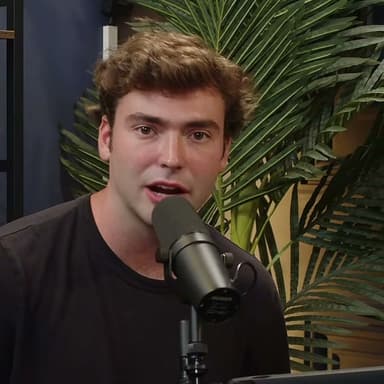
Josh Suggs
Founder, StreetTalk
The moat was the reps, not the idea
He had a 2.1 GPA and no business experience. Two years after he started walking up to strangers with a microphone, StreetTalk is more than 100 people.
Where to watch and listen
- Profit his first summer of street interviews, on referrals, with no website
- $200K
- People at StreetTalk inside two years
- 100+
- Street interview ads he has personally made
- 20,000
- Made teaching tennis the summer before, off a mothers' Facebook group
- $45K
- Run rate three months after the merger, with two people in the business
- $3M
- High school GPA, in special ed, no free period
- 2.1
Follow Josh Suggs
“Every day I wake up, someone I don't know is trying to give me money for a service that I can deliver in a second that no one else in the world is selling.”
Josh Suggs made $200,000 in profit his first summer doing street interviews, with no website, no personal brand, no connections and no investors. He was sleeping on a friend's couch in an apartment with no Wi-Fi, so every night he carried an SD card to an Apple Store, dumped eight hours of footage onto a display machine and emailed a public Google Drive link to his one editor in Croatia. He spent high school in special ed with a 2.1 GPA, in the same house as a twin sister who finished every AP class by sophomore year and went to the University of Chicago on a full ride. The thing he sells did not exist before he sold it.
The method was in place years before the business was. The summer before college he told a family friend he was the best tennis teacher there was, having never taught a lesson in his life, watched YouTube videos the night before and turned up to babysit six-year-olds with rackets. Two weeks later he was booked seven in the morning to six at night, and that summer he made $45,000. What scaled it was Westport Front Porch, the town's Facebook group for mothers: he gave free lessons in exchange for a post, so no mother could open the group without seeing his face next to a different smiling kid. He describes it now as zero CAC and infinite LTV, and is precise that he had no idea what either term meant at the time.
He ran the identical play on consumer brands. Sean Frank is not the CEO of a wallet company, in Josh's reading, he is a B2B influencer followed by a hundred thousand other consumer brand CEOs, which is the same structure as mothers following mothers. So he went to Frank and to founders at Grüns, Dr. Squatch and Brez on Twitter and LinkedIn with an offer that needed no audience of his own: pay me $5,000, I will get ten strangers reacting to your product, I will edit it, you run it as an ad. He did not know what ROAS meant on his first five sales calls. The first summer did $200,000 on referrals alone, with no website.
The timing was not luck he claims credit for. Meta shifted from lookalike targeting toward engagement, which made creative volume rather than media buying the lever in an ad account, and brands suddenly needed dozens of net-new assets a month with no way to make them. A street interview solves that arithmetic by construction, because every reaction is a net new video. His answer when a client asks about the moat is not the format, it is the reps: 20,000 of these ads, eight hours a day, 30,000 steps a day around New York for a year. Send anyone else out there, he says, and they cannot do it.
Twice the business was rescued by someone else's competence. He dropped out in November of his senior year, in the middle of Q4, when every brand was spending; by January the calls dried up and he was exhausted, living beside a mattress in a room full of brand boxes, running a park with a phone and a Stripe link. He merged with a friend in Missouri who ran a media buying agency and was an excellent operator but could not sell. His team, Josh's offer. Three months later two people were at a $3 million run rate. Then the man his mother had called for advice, Jesse Eisenberg, who had spent two decades at Tinuiti and told her to let her son quit, phoned to introduce himself. That call ran three and a half hours. Three months after it he left to be CEO of the company a 21-year-old had started in a park.
Underneath all of it is a claim about proximity. He is part of a group of eight founders, all under 23 except his partner, who call themselves the Media Mafia, share an office, sell to the same kind of buyer, send each other introductions daily, and hold a monthly earnings call: $3.75 million between them the month before this recording. He calls it increasing the surface area of luck, and it is the least mystical thing he says all episode. The rest is a man who repeated the words success or death to himself walking to a park in a New York winter while everyone he knew was in college, and who will tell you without smiling that he believes he is the greatest entrepreneur in history.
What the conversation covers
The moat is the reps, not the format
Anyone can point a camera at a stranger. His answer to the moat question is 20,000 ads, eight hours a day, 30,000 steps around New York for a year, and a bench of people he trained to do it.
$5,000 and no following
The offer that let a 21-year-old sell to nine-figure brands: ten strangers reacting to your product, edited, ready to run. He needed no audience because the ad account was the distribution.
Sell to people who already have money
His first rule for anyone starting out. Brands have advertising budgets; consumers and your friends' parents do not. At 15 he walked into barber shops and asked for a $3,000 retainer.
You have to fire yourself
He calls himself good at one thing and not an operator, and says so without hedging. Both the merger and hiring a CEO over himself follow from that, and he frames dilution as irrelevant while the pie is growing.
Success or death
What he repeated walking to the park at 21 in a New York winter after dropping out. He argues the only common denominator among founders he interviews is delusional self-confidence.
Surface area of luck
Eight founders under 23 who found each other online, moved to New York, share an office and run a monthly earnings call. Introductions every day, and, he claims, a 10x across all of their businesses.
Timestamps
Mentioned in this episode
Companies
- StreetTalk — His company, founded as 203 Media and rebranded in December 2025. Unscripted street-interview ads for consumer brands, now running in Miami, New York, LA, Austin and Atlanta
- Tinuiti — Where Jesse Eisenberg was chief growth officer before leaving to become CEO of StreetTalk. The largest independent media agency in the US
- Ridge — Sean Frank's company, and Josh's worked example of a founder who is really a B2B influencer: a hundred thousand followers who are themselves consumer brand CEOs
- Freshly — Mike's company. He raised its first round the same way, by collecting nos until the pricing was right
Concepts
- The reps are the moat — 20,000 ads and eight hours a day. The format is copyable, the volume and the trained bench are not
- Every reaction is a net new video — Why street interviews fit an ad account that shifted from targeting to creative volume
- Micro celebrity in a niche — Mothers in one town's Facebook group, then consumer brand founders on Twitter. The same play at two scales
- Sell to people with money — His first rule for anyone starting out. Find the business owner, find a service, then do it for their friends
- Build around your weaknesses — Mike's framing, and the reason Josh merged with an operator and then hired a CEO over himself
- Collect nos, not yeses — Mike on pricing and fundraising. A hundred yeses and no nos means you are priced wrong
- One-way and two-way doors — The Bezos rule Mike works from. Most decisions are correctable, so make them fast and iterate
- Surface area of luck — The Media Mafia: eight founders under 23, one office, introductions daily, a monthly earnings call
- Become someone people want to mentor — His answer to every young founder asking how to find a mentor. Push the car and someone will help you push
Named in the episode
- Three Simple Steps — Trevor Blake's book, which Mike had just finished and cites on goal setting and manifestation
- The Magic Castle — The Hollywood magicians' club Josh talked his family into at 12, by doing card tricks for a stranger on a bench who turned out to own it
Show notes
Josh Suggs made $200,000 in profit his first summer walking up to strangers in New York parks with a microphone. No website, no personal brand, no connections, no investors. He was sleeping on a friend's couch in an apartment with no Wi-Fi, so every night he carried an SD card to an Apple Store and emailed a public Google Drive link to his one editor in Croatia. He had a 2.1 GPA and spent high school in special ed, in the same house as a twin sister who went to the University of Chicago on a full ride. StreetTalk is now more than 100 people and eight figures of revenue.
This episode is presented by Proppel. Hire A-player marketing and ops talent from the US and LATAM, and get 10% off your first hire: https://www.weareproppel.com/theadvantage
Follow Mike on Instagram: @mikewystrach — https://instagram.com/mikewystrach
Josh breaks down the offer he cold-pitched to brand founders on Twitter, the phone call that got his mother's blessing to leave Syracuse, and the merger that made it an agency.
What you'll learn in this episode:
◼ The Westport Front Porch play: free lessons traded for posts in a town's mom Facebook group, then the same play on founders
◼ The B2B influencer read: Ridge's Sean Frank is not a wallet CEO, he is followed by 100,000 other consumer CEOs
◼ The $5,000 offer: ten strangers reacting to your product, edited, ready to run, sold with no audience of his own
◼ The reps moat: 20,000 of these ads, 30,000 steps a day, and why a client cannot send a replacement
◼ His team, my offer: the Missouri merger that took two people to a $3 million run rate in three months
◼ The Media Mafia earnings call: eight founders under 23 reporting numbers monthly, $3.75 million last month
If you are young, broke and convinced you need a credential before you can start, this one is about the reps nobody else will do.
CHAPTERS
0:00 $200K Talking to Strangers
3:33 $45,000 Teaching Kids Tennis
6:21 $5,000 for Ten Interviews
8:54 Uploading at the Apple Store
12:34 My Moat Is 20,000 Ads
15:42 Mom's Friend Said Drop Out
19:50 His Team, My Offer
21:14 "I'm Why You Dropped Out"
27:19 He Owned the Magic Castle
35:32 A $3,000 Retainer at Fifteen
41:15 Collect Nos, Not Yeses
43:57 One-Way and Two-Way Doors
54:12 The Media Mafia Earnings Call
56:49 You Are a Time Billionaire
59:57 Final Thoughts and Wrap Up
CONNECT WITH JOSH SUGGS
StreetTalk → https://streettalk.com
All episodes → https://mikewystrach.com/podcast
PRESENTED BY PROPPEL
Your business is only as good as the people in it, and finding real A players is one of the hardest things you'll do. Proppel specializes in marketing and operations talent, placing top people from the US, LATAM and beyond.
Whether you need video editors, graphic designers, or media buyers from LATAM, or managers, directors, heads of department and VPs in the US, they'll help you build the team you actually need to grow.
It's all performance-based. You pay a one-off fee only once you actually hire someone, so no retainers and no ongoing costs. Every hire comes with a three-month guarantee.
Get 10% off your first hire → https://www.weareproppel.com/theadvantage
Full transcript
Mike Wystrach in conversation with Josh Suggs. Lightly formatted from the episode audio.
WiseTrack Co.: Today's guest, Josh Suggs, is a 22-year-old entrepreneur who in two years has built an eight-figure business, dropped out of college after he made $200,000 talking to people on the street. I made $200,000 of profit without a dog advertising, without a personal brand, with no connections, sleeping on a friend's couch. No business experience. His goal is he wants to make it the largest international agency. He wants to create a whole new industry around people talking to people on the street. You'll pay me $5,000 and I'll go out and get 10 stream views for your product, edit it for you. You'll run it as an ad. If you're no one, how do you get someone to want to interact with you? You don't need to be good at everything to be successful in life. You need to be good at one thing. How do I get the founders of a nine-figure brand to care about me and answer my call on a Sunday afternoon? Where did you get the confidence to just go up to people? I mean, I couldn't even get out of bed to talk to someone. Think about interviewing hundreds of people every single day and I was by myself. All my friends are hanging fun in college. I was signing a brand every single day. I couldn't stop making money. Walker Sue, like, what did that evolution look like? So super, super excited to have Josh Suggs on today. ⁓ Josh was actually when I started kind of ramping my social game plus getting prepared for the advantage. Josh was one of the first people nice enough to have me on his street talks. Not only the nicest guy, amazing story, which we're gonna get into, but like founded a company for those of you who are out there who are younger, who are like, I'm too young, I don't have the experience. This is an awesome lesson around how to just lean and start doing. And that's the number one thing I always tell people, just start doing. So we're gonna go into your story, but dropped out of school to start after making $200,000 in a summer. ⁓ you now created an eight-figure agency in less than two years. But outside of that, I think what I love is like you're the perfect example of generosity, of just like paying it forward. Welcome to the show. Thank you so much, right. Thanks for that was an awesome introduction. Thank you so much. And yeah, could not be more excited. I had an amazing time. Being Washington quite part. I think we were your your first media outlet ⁓ piece of content together. We were. So the ⁓ background R we DM'd you. Yep. ⁓ we saw your show and loved it. And then we were like, yeah. So you were nice enough. You're yeah, meet us down at ⁓ Washington. Which is like to let's start from the beginning. Cause I think your story is so cool. I'm gonna ask you a bunch of questions, which tactical questions, but give us kind of like the cause I think like your background is like I always tell people like 'Cause I think people can come up with a lot of excuses, but like you have like you are not the typical path to doing a startup. So give give us kind of the background of how you get in the most unconventional path possible. So I'll I'll take you from the beginning. Yeah. I b two point one GPA, special ed. I wasn't even allowed a free period in high school because I had to do double special ed. The lowest math class at my high school, and I have a twin sister. Who finished every AP class or sophomore year, secondary class, got a full ride to University of Chicago, where she graduated with a 4.0 GPS. My twin sister. So in every single convention, so in every, you know, metric, I was the one that was not gonna succeed, right? But I was always really good with people. I always, I always had an ability to captivate people, to build relationships. ⁓ and I always I always found a likable sauce. That was always something I was really good at, was I was really good at building relationships. Let me pause here for a second. This show is brought to you by Propel. They find brands like yours exceptional marketing and operational talent in the US, Latinam markets, and beyond. For now, the links are in the show notes, and all of our listeners get 10% off your first hire. Okay, let's get into it. And early on in high school, I used to play tennis. And I was a tennis coach. And actually I haven't talked about this on podcast, but saving it for this one. But my summer during right before COVID was 2019. I never taught a tennis lesson in my life. And My family friend asked me to teach their kids tennis. They're home for the summer. And I said, absolutely, I'm the best teacher there is. I've been teaching for months. I never taught a lesson before in my life. I showed up there, I watched YouTube videos the night before. What kind of ball games can we do with kids? I was just kind of learning and really just BSing my way through it. I showed up, these are six-year-old kids. If you just have them swinging, they're happy, right? It's basically babysitting. And the parents loved it. That day, two of their friends asked me to do tennis lessons. Then I was booked Monday, Tuesday, Wednesday. Within two weeks, I was going from 7 a.m. to 6 PM every single day. That summer made $45,000 teaching tennis lessons. And how I scaled it was you have Westport Front Porch, right? It's a it is a mom's Facebook group with every single mom in the town. So I would give free lessons and if you in exchange for you posting me Westport Front Port on Westport Front Porch or Fairfield County Front Porch. So then every day a different mom was posting me with their kid, right, smiling, teaching Josh is the best teacher in the world. And I would give them all a discount. So then if you were a mom, you couldn't go on this Facebook group without seeing my face with a different kid teaching tennis. And every day I would get twenty different test mex text messages from different numbers, ask me to teach their kids tennis. Boom, free lead gen, my CAC zero. And that was the exact method I was before you knew what CAC was. I didn't know what CAC was, but that was complete free CAC and my L T V was infinity. Yeah. So I remember very early on for Street Talk when I talk about my first summer, how I made $200,000 of profit without a dollar of advertising, without a personal brand, with no connections, ⁓ sleeping on a friend's couch with no business experience. This is still today. This is the first LSC I've ever opened in my life. How I was able to do is the exact same marketing strategy. So a lot of these brand founders, you want to look like the CEO of I love you, Sean, Sean Frank, you're my guy, CEO of Ridge Wallet. Yeah. A lot of people think, ⁓ he's a CEO of a of a wallet. No. He's a B2B influencer. He has a hundred thousand followers on Twitter. He's followed by a hundred thousand other CEOs of consumer brands. That's a gold mine. That is the equivalent to moms in a Facebook group following other moms. So what I would do is I would go to people like Sean, Aaron from Breeze, and other brand founders, Hugsleep, all these consumer brands, all these brand founders are all on Twitter and LinkedIn. And I would go to them and I'd say, hey, I'm gonna make you some banger ads that you can't get anywhere else. I was there's a lot of product market fit too at the time. I was the first one to do street interview ads, right? So everyone was trying to do the hard rocks guy, what up, James, right? Try to build a personal brand doing street interviews. I was the first guy's like, I don't need a following. I don't need to be Jake Paul or Mr. Beast. You'll pay me $5,000 and I'll go out and get 10 stream views for your product, edit it for you. You'll run it as an ad. It's gonna convert better than anything you've ever seen in your life. Yeah. So I think the huge thing just k kind of capture, I want to capture a few of these things that I think you're saying and you're kind of reasonable. So I think the first thing is adding value. And I think like understanding the objective. And then adding value. And I think you obviously were able to scale the the the tennis because you understood that like parents wanted to have someone that was enthusiastic, high energy, having their kids have a great time. They didn't care as much about it. In word of mouth. Exactly. I w I wasn't just gonna DM parents on Instagram. They trust and they see Ashley's doing this with her kids. I need it too. That's the credibility that you get for free. And then I think the other thing that you're you're kind of hitting on, which is like, I think I hear this all the time is like, you know, how do I get access mentors? How do I get people to kind of like you know, to want to interact with you? If you're no one, how do you get someone to want to interact with you? And the whole thing is is like, don't try to make it about you, make it about them. So I think the thing you're you're doing is you're saying, look, I'll I'll create content for you that you need content and all these brands, especially as the Facebook algo switch to like massive content. They desperately need a content and then you made it risk free. Which is like if you don't like the content, you don't pay for it. And if you like it, and so I think that's just like the key. And then you were smart to go after like the same st like knowing who your target audience is. And I think that's the other thing is like you don't have to be everything to everyone. Like you're you were very successful because you went after moms in a very small area and you knew that moms are the ones became a micro celebrity in a niche. A micro celebrity in a niche. Exactly. It's like it's not about more and more today. And I think this is I hear in Gary Vee and and great people that like. Are ⁓ s it's like it is really about it it's engagement. It's about people actually coming to you for a specific reason versus like the old way was like, ⁓ if you have a hundred million followers, but if you have a hundred million followers, you actually are like, you know, you're something to everyone. Verse like what you'd rather be is like to these hundred thousand you're riches and niches. Yeah. And that's ex this exact method you s you hit the nail on the head. How do I get the founders of a nine figure brand to care about me and answer my call on a Sunday afternoon? How does that happen? I'm 21 years old and and I have no money and I had no I had no business. But when they look at their ad account and they see their top three ad spending is my face on it, guess what? They're gonna pick up my call. And they're paying me a few thousand dollars and they're spending a million dollars a month on ads, they're gonna pick up my call. Pretty quickly. We did we scaled to that so that summer, $200,000, just referrals. I didn't even have a website. I uploaded all my content at an Apple store every night. If you look at if you think about how do you upload eight hours of footage. Right. I was sleeping on a friend's couch in a in a shitty apartment. Right. I we didn't have Wi Fi. So I'd go to Apple Store every single night, upload my take the S D card out of the camera, put it in the Apple Store computer, put it into a Google Drive, make the link public, and I'd email it to my one editor. I did that for six months, just before he even had a place to stay in YouTube. And you found an editor in ⁓ in Creation. So he was seven hours ahead of me. Yeah. So the time I was filming, right, I'd upload, I'd send it to him, he'd wake up with fresh footage, I'd go to sleep, he would edit his whole day there. By the time I woke up, I was ready to go. Ready to roll. And we just did that for the for for a for the first year. And I think what you were telling me when we were doing this, which I thought was like absolutely brilliant. One of the things you said, which I thought was like super, is like, so kind of giving background back context, just knowing as a as a brand. So the Facebook algo kind of switched to where Facebook used to used to kind of it used to be all about targeting and knowing your and look alike. So you'd upload your list of customers and then that the the the Facebook algo would learn off your customer attributions, like what you thought was likely gonna be your customer. And then it switched where Facebook ultimately said we're going towards engagement maxing. So ultimately we're gonna reward content that is whether it's an ad or not that is going to drive the most engagement. So all of a sudden founders realized that all the games we had going for us on how you could ma maximize by lookalikes and buying lists and doing all these things, all of a sudden was out the door. And really now you needed massive amounts of content. You need you. And you didn't the crazy thing is you didn't know what content was going work. So and you kind of see the continued evolution in content, but UGC, kind of this like rougher content, not polished content, was when you were starting, was like absolutely like you needed to get a ton of UGC. But the challenging thing for brands was like, how do you go get t 30 videos of UGC content without having to build this whole thing? And you By doing street interviews. Every reaction is a net new video. It's a net new video. So you were able to go out with products and get thirty videos real time, relatively quickly. Yep. And then you started learning what actually was gonna work. I didn't know what media buying was when I started. Brands, I used to ask the brands, ⁓ where can I see the videos? I thought they were just post them. Like, no, running these ads. Like, what you talking about? Running these I didn't even know in the beginning. I didn't know what Rowass was. I remember my first like five or ten sales calls. They were asking me like what like a target row ass was, you how the performance. I was like, what are talking about? Look at these videos. Tell me you don't want this. This is me in a park screaming about a product. You don't want this for your brand? I was just selling energy and hype and the offer sold itself. It's like, hey, do you want to ship me your product? I want to have 10 people in your Denver Graphic give me an amazing reaction to it. I'm gonna edit it for you and give it to you. Tell me you don't want that. Yeah. So everyone wanted it. Then it was like, okay, now how do I make sure this video makes the money? Because at first, everyone just sees a video. Most people don't know that that that video, if you just put it into an ad account, will spend millions of dollars and make you millions of dollars more money. But it's really just a video at the end of the day. ⁓ so I I was the first person to do street interview ads. And then where we got really lucky was the net new asset variation, creative volume, creative diversity became the biggest lever in the ad account. Media buying was the lever to get new customers. Then it became all about creative. If you look at a brand like Comfort, Comfort's scaling every single month with Adding five to six thousand net new assets a month, every single month. Brands, if you look at, you know, many other eight figure brands in the space right now that have been around since 2015, they're uploading 40 to 50 ads a month. The volume, the the lever is creative. And that's where I was in the right place at the right time. And I had the moat because most people are like, well, what's your moat? My moat is I've done 20,000 of these ads. Send anyone else on your team out there to go do stream views, they're not gonna be able to do it. I knew exactly how to do it. I had people trained, ready to go. We can get into how I actually scaled the business because I was running 30,000 steps around New York City every day for a year, shorts and t-shirt in the winter in New York City, riding the subway stations, in my heart out. ⁓ and pretty quickly I realized I'm not a business. If I break my ankle, this thing goes to zero. ⁓ so we can get into also how how we went into scaling it, but I saw a tidal wave coming. I saw every single brand was a media company, and there there needed to be a business selling media at scale. And there's nothing like it. Yeah. And I think, I mean, there's so many lessons. And I love this is because I I talk to so many young people who are like, I want to start a business. It was like, great, what business do you want to start? And they want like someone to tell them, like, here's and I think the the number one advice I people, if you want to start a business, start a business. There is no magic secret sauce, but by starting, you actually learn as you start and do it. And and this was well, this was your first LLC. I would argue your first summer camp was a business. Yeah, it was. I didn't have a business account, but yeah, it was a business. But you take those those methods. So now you go and I love this because like post the summer you now have a decision. Yeah. So you just told us you were a shitty student, but you now have just like again, I always like this is like the LeBron, you're now making real money over a summer. Yeah. And so the decision is is like, do I continue doing what the the standard of like go back to school or do I really lean into this? Yeah. So I was going to my senior year of college. And I only had about eleven classes left to graduate. And so I was like, okay, I'm gonna stack my classes. I'm gonna take classes Monday and Tuesday. Tuesday night I'd fly to New York. I'd interview in New York City because all brands went to New York City and one college campus till Sunday. Sunday night I'd fly back to school. I did that for seven weeks. Flew back and forth to New York City. More and more brands kept calling. And I looked around. I was making more than every one of my teachers combined. It was all profit. I had no employees. I had no one to pay. And I was making thousands of dollars. Every time I looked at my phone, a new person was asking to give me thousands of dollars. ⁓ and to me, that was all the money in the world. So it's it's a great story. I don't know. I don't know. I'm gonna try to condense it. My mom, my mom worked her heart out. I don't have a great relationship with my dad. ⁓ I've talked about him ⁓ on a podcast before, but he really was not a father figure to me. And it was really just me and my mom. My mom worked really hard to get me to to go to Syracuse. And she was very anti me dropping out of school. Like she wanted more than anything for me to graduate. And she didn't care how much money I was making. She didn't care what I was doing. She just wanted me to cut get a college degree. And I was like, Mom, I have lightning in a bottle. I was like, I I I've I got something special. I don't know what I don't re I don't know what I have, but every day I wake up, someone that I don't know is trying to give me money for a service that I can deliver in a second that no one else in the world's selling. And I don't know if I'm ever gonna get an opportunity like this again. And I'm not an operator. I'm not a CEO. I I knew that I wasn't special. I had just created a niche that is now getting more and more and more ⁓ more valuable to the marketplace. And so she called a friend that she had in advertising. And I didn't know who this friend was. And she said, This is what my son's doing. She sent him a couple of videos and this guy was running a really big ad agency called Tenuity. I had no idea about this about that at the time. He was the chief of growth of a company called Tenuity. So this is my son Josh. He didn't talk to as well. In about seven seven or eight years. So she reached out and I haven't spoken in a while. I need your advice. And he was like, he looked at the videos and he said to my mom, He's like, You're gonna not like my answer, but you should let him drop out of school. And mom was like, What you talking about? He was like, I run one of the largest ad agencies in the US. They do hundreds of millions of dollars a year with Procter Gamble's clients and Coca Cola and all the big boys with thousands of employees. He's like, This is, you know, vertical video advertising is the future. All of our clients are creating vertical video advertising. I don't even know how we would go about and do this. ⁓ if he's getting this many clients, these are these are tenuity clients that he's signing, right? I was signing Grunes, Dr. Squatch, big brands, just myself in a parking. These are clients of tenuity that are reaching out to him. ⁓ he's like, you he he you he may resent you for the rest of his life if you don't let him drop out. I didn't know this conversation had happened. My mom called me October of my senior year, and I thought she was gonna call and ask me. what hotel rooms to book for graduation. And I said, I was like, what's up? I was in class. And she's like, I talked to my friend in advertising. If you want to drop out, you my blessing. I said, Are you sure? She said, Yes. I talked to my friend in advertising. If you want to drop out, you have my support. Said, okay. I hung up the phone. I was in the business school and she called me. I walked right into the dean's office. I didn't have a meeting. I they were like, you can't meet with him. I well I'm dropping out, so I'd like to meet with him. He met with me. He was like, why are you doing this? I was like, I I'm chasing something. And he I was like, Can I come back if it doesn't work out? He's like, You have ten years to come back if it doesn't work out. I was like, fantastic. And good for Syracuse too. And he he disenrolled me right then and there, shook his hand, walked out, got my car, I drove to New York City and never looked back. Wow. And so you built this and so I think what's really cool is like then you took this, which was which was lightning in a bottle, no doubt on that. But it's still kind of like a single single man operation. ⁓ yeah. You have your editor in ⁓ Croatia. Yeah. You talk him into both dropped out with dropping out as with you as well. Yeah. So it's the two of you kind of fully committed. But now you've built this into like a real agency. Which there is a big difference between two guys. And again, you're making a lot of money, but there is so much time and energy. And then now you've got to start hiring people. Walk us through like what did that evolution look like? Cause I do think like, as you said, that was your first LLC. Now it's like all of a sudden you gotta put on like the To business, like I've got to start thinking about hiring people. I don't even know what these roles are. All that shit. Yeah. Totally. So I dropped out during Q four. Q four, if you don't know, if you've never run Facebook ads before, this is where every single brand spends most of their advertising dollars. So I dropped out of the heat of Q four. So I thought I was on top of the world because I had every brand trying to bite at me for creative. January rolls around. I still really don't have any retainers. Valley comes out. Yeah. Yeah. And I'm like, whoa, I'm still right around this park every day. I'm exhausted. I mean, I couldn't even get out of bed to talk to someone. Think about interviewing hundreds of people every single day, taking sales calls, walking out a park with your phone, saying a stripe link, then going out doing more interviews. I mean, I I was living in a TikTok shop. I had a mattress in a corner, the whole room was just boxes of brands in my in that apartment. And I was by myself. All my friends were having fun in college. I had a friend who was running a media buying agency who I met through other mutual friends. And we're about the same size. He had an amazing team. Very sticky clients, amazing LTV, but he couldn't he couldn't scale. Wasn't really great at sales. He was an amazing operator, very good at managing people, very good at hiring, very good at training, amazing manager, and an incredible, incredible COO. But he could not scale. He wasn't scaling. And he was also in Missouri. So he didn't have the networking connections that I was having in New York with all the big brands. I was signing a brand every single day. I couldn't stop making money. My problem was I couldn't keep them. And I had no employees and I had no infrastructure. So me and him merged together and we started a company called Street Talk. And that was basically his team and my offer. Yeah, and me. So then pretty quickly, instead of him hiring UGC creators and media buyers, he started hiring street interviewers. And I told him, I was like, Hey, you're never gonna take another sales call the rest of your life. You're never gonna worry about money again the rest of your lives. I'm gonna go make all of our money. I gotta make sure there's someone to sell. You hire all these people. So that was in March of 2025. I dropped out in November of twenty four. So there's about a six month difference. ⁓ then three months after that, we got it to a few probably three, three million dollar run rate, the two of us. That scaled. That was like, okay, all I have to do every single day was find money, which I'm very good at finding money. All he had to do was hire and crew and train people. He didn't have to think about sales. Perfect match made in heaven. From there, my mom said my friend in advertising, who The original guy The original guy wants to talk to you. I said, No, go I said, I'm busy. I was busy. And she reached out about a week later. She said, Please, he really wants to talk to you. Can you please talk to him? I said, No, I'm busy. I was super busy. And she was like, Please just do me a favor, this guy really wants to talk to you. Poor guy is the guy who got you. So she puts me in a group chat with him. It's a Sunday afternoon. And the first thing he says, I didn't know he was the guy that let me drop out or told my mom to let me drop out. I call him or he calls me. Pick the phone. He goes, You know reason you dropped out of Syracuse. And I was like, What are you talking about? He's like, Remember that guy your mom talked to in advertising? He's like, that was me. I was like, Who are you? And he was like, I'm Jesse. And he told me a little bit of his background. He's a chief of growth, the largest privately owned ad agency in America. He was there for 20 years, sold it twice, acquired about a dozen ad agencies while he was there. He knows exactly how to build and sell you know agencies, creative agencies specifically. And we started talking. And it really wasn't like, hey, I want to come and and be your partner. It was really like, you're on the forefront of something. I've been at Tenuity for twenty years. What are you seeing in advertising? And we just got along. That phone call is three and a half hours. About three months later, he left Tenuity to be my partner and to be the CEO of Shree Talk. And that one chess move added us credibility, authority, and opened doors that I could never have done as a 21 year old. Because now it wasn't some idea and Riding around a park. It was the chief of growth, the largest agency in America, just left his corporate job with a wife and kids at home to partner with a kid in a park. That added authority and credibility to the world. And that took us to the next line. I think in you hit an like, I love like this conversation because there's so many things that you hit on that I try to always give people advice. One, founding business is a lonely road. Yeah. So bringing on co-founder, I'm a huge fan of if your first time. Two, build around your weaknesses, not your strengths. So I was people are always like, ⁓ I need to get better at So was like, you don't. You need to hire people that are better than that than you. So you can do the one thing that you're really strong at, which is like your skill and remains, and I was amazed kind of why is like your skill is like you're a people person. You're out there and I think you've built this muscle and it's getting better and better. Of like you're able to engage people in awkward situations where they don't want to talk to you. And like that's the best sales 101 because like you're actually. Kind of forcing people that are like get away from me into like having a conversation and turning their conversation into more of like, I mean, I saw you do it first time with ours and I was like, man, this guy's got a natural skill of how to engage. Totally. And the job of the entrepreneur is get from A to B the fastest. So I just skipped 20 years of experience by bringing him in. I didn't now need to learn how to build and sell an agency and manage a hundred people. I he knows how to do that. So we just made the pie bigger. So so you just keep on and that's like the other thing is like dilution, people focus on like it's dilution only makes sense. If the pie is not growing. Yeah. If the pie's not growing again, like I always tell people, like, how much how much dilution do you have in your in your, you know, whatever Tesla shares or whatever? You have no idea. You care about the share price. You care, does my my value in that company increase? And it does. And so it's all about like the early days is bring on a the great team to create the because that's ultimately as well as like what creates the exit, right? Is like. That's a pure buying pure buying people. Yeah. When people are looking, is like they want to buy if you're buying a company, you're not buying an individual. And that's always like the mistake is like if you build the, you know, and you saw this with like Oprah or Martha Stewart, right? So Martha Stewart's probably the best example. She built this brand and it was a phenomenal brand worth, I think at peak, it was like three, four billion. But everything with Martha Stewart. So the problem was is Martha Stewart then later gets indicted. The brand goes from three billion to zero because there's no company. It's just it's it's just it's just Martha Stewart. Right. That's the issue with influencers. Right. If Jake Paul wants to stop making content, there's there's or I Jake Paul's a bad example, but your influencer of a million followers stop making content. They're just selling brandios for five, ten, fifteen grand or whatever it is. There's no business there. So how do you build the business? But I do think the the the thing that I've been a fan with influencers is I think cause it I I think you see with any new industry, there's like an evolution and then there's sub markets off the sub markets. So like Technically, you're kind of an influencer. You're kind of a hybrid between an influencer and an agency. Yeah. But like you found this unique niche of like you're doing the work, you're out there, you're like the paid spokesman, but you're also then built the whole agency behind it. I do think where influencers can make an impact is by being there on a niche and then build the business underneath you, but don't make yourself the whole point of the business. So I do think what Jake Paul's done a good job of. Is he's created all these other businesses that have nothing to do with Jake Paul. Now he was using his network to launch an action. To get off the ground and build a connection. But now you have a huge sport strink, you have all these things. So like, so I do think it's like, how do you turn your your mark, your like your presence, your marketing into a business? But it ultimately you do want yourself, like no one likes being, I always say, like, you know, the problem with being a lawyer is that like you only get paid for billable hours. So, like as an entrepreneur, you really want to get you wanna get paid while you're sleeping. You want to get paid while you're and that's building the business. So ultimately, when you get a team working for you, you don't have to be out doing street interviews, but someone does. Someone needs to have that like you gotta fire yourself. Yes. And you gotta and you gotta you gotta you gotta get yourself out of the business. So that's something I did, and that was just very a very natural instinct of what I understood about business just from my gut was I'm good at at this one thing. I need to spend all my time leveraging that one thing. I can't learn how to be good at 50 other things. I gotta attract those people, sell them a vision, get them to believe in it. And so I can just hammer what I'm really good at because I can compound what I'm really, really good at over time. I'm gonna be the best of the world at it in 10 years. I can't compound my time if I'm trying to do 50 things. Again, I ain't gonna keep leaning in because I think you're like as I talk to young people, it's like one of the things I was so impressed with when we were doing street talks and I asked you, I was like, where did you get the confidence to just go up to people? 'Cause like think that's where like for most people, myself included, there's like a fear of like I'm gonna go up and I'm gonna interrupt, you know, hundreds of people a day. And you said you were a magician. So you're like used to like entertaining and I think that's such a cool, like like I think it's is great, Steve Jobs of like you can never connect the dots looking forward, only backwards. Totally. The magician was I used to just call the proach strangers when I was twelve and thirteen years old. Yeah, that's where stead my com that's what built my confidence was. I used to just go up to strangers as a middle school kid. And make their day and make them smile. I got really good at talking to people and and being social. And, you know, there's there's a really good story. I'll try to keep it really short, but my dream was to go to the Magic Castle when I was really young. The Magic Castle is ⁓ basically a members club for magicians in LA. And we were going to LA for a family vacation when I was 12 years old. And I begged my parents, like, guys, we have to go to the Magic Castle. We have to go. My parents exhausted every one of their networks. No one could get us in. We flew to Los Angeles. We got there hotel about eleven PM at night. I woke up 7 a.m. the next morning and I hit the streets of Culver City in Los Angeles. Started doing car tricks for people for hours. About 9 a.m. comes around and I have an eye touch at the time, which you had to be connected to Wi-Fi to reach your parents. And I was like, ⁓ they're probably awake right now. They're probably wondering where I am. And there was an old man sitting on the bench. This is my first morning in Los Angeles. I've been wanting to go to Madcast for six months. I was like, you know what? I'm just gonna walk up to him and do a car check for him. Said, sir. Do you like to do you like magic? And he he was reading a book. He looked up, he smiled. He's like, I love magic. And I was like, I do a car trick for you. He's like, Of course. I did car tricks for him for 45 minutes. I was pulling cards out of his ears. I was making him smile. He was having the time of his life. And he was like, Have you ever heard of the Magic Castle? And I was like, Sir, I've been wanting to go to this thing for six months. Like it's my dream. Like, no, I don't you need no member. I mean, we we we don't know anyone. And he just put his book down, he smiled, said, I own the magic hassle. He was the owner of the Magic Castle. And he was, and he's like, what's your email? I didn't even have an email. And he's like, well, what's your mom's email? I gave my mom's email. He emailed five VIP tickets to the Magic Castle for that day to check in at 11 a.m. He gave me a high five. I walked away. I ran upstairs. I was like, guys, wake up. I got us into the castle. I hadn't even been in LA for 10 hours and I already got us in. And that was the first moment I realized I could do something that my parents couldn't. And I think a lot of kids, they rely on their parents, they ask permission, they get really good at and comfortable always asking for permission. And as an entrepreneur, you never ask permission. You make your way, you make you call your own shots, you make your own opportunities. And remember that blew my parents' mind. That as a twelve year old, I was walking around Los Angeles by myself and found the owner of the magic house on God's V V I P tickets. We all went that afternoon. We spent the whole day there. Free lunch, free dinner, all the shows. How much you feel like because I just finished this book, ⁓ Three Simple Stabs, I kinda go like I'm a big fan of like goal setting, but I also believe in kind of I know it's kind of mystiky, but I believe in manifest manifestation where you just man you can like and I think that's what founders do is like you envision the world you want and then you go create it. And I always think like, but I mean, do you do you do any of that? Are you in any of that? ⁓ yeah, I manifest I manifest millennium when you're a man in your life. I mean your reality can only become your imagination. Yeah. So it's what the your reality can only grow as far as you can imagine. So I started just practicing when I was really little, the biggest possible life. And I can't even tell you how big of goals I have, big of dreams I I mean, I in my head, I'm a billionaire. Right. In my head I've inspired millions of people. I have best selling books, right? I have businesses that employ tens of thousands of people. And I'm gonna go down as the greatest entrepreneur in history. Right. But I'm twenty twenty three years old. But I've scaled my business to over a hundred people in in two years and eight figures of revenue. Not because I knew how to run a business, because I believed I could be a person that could learn how to do that. So I really think the and I've also, you I've my I've on my own show as well, and I interview entrepreneurs every single day at this point. The common denominator is the person that has delusional self confidence and delusional belief. And it's raw conviction. There is no answer. There is no magic potion. No one's like we're not different, right? It's confidence and then just the ability to think that you're You're you can get it done and it's you're gonna s it's gonna be success or death. And when I would walk to the park every day when I was twenty-one in the winter in New York City, everyone's laughing at me after dropping out of college. I would just repeat to myself, like a psychopath, success or death. Success or death. And that was it. I didn't even know what success meant, but I made a decision I was gonna be the most successful entrepreneur and I was gonna go down it and this was gonna be the greatest entrepreneurial story in history, which it will. Becoming a street talker is gonna be the same thing as being an Uber driver, as being a real estate broker. The gig economy is gonna fucking explode in the next five years. And in every single city around the world, you're gonna be able to get a job as a street talker and I'm gonna invented this entire industry. But that only is gonna come to reality because I believe in my whole heart and I don't have to die before that doesn't happen. Let me pause here for a second and introduce you to our title sponsor, Propel. Every business I've built has had a huge, huge, huge piece with international talent. And as we started building the advantage, we wanted to bring in international talent focused around media podcasts and we started doing a lot of research and we came across papel and we were really excited first and foremost to use them for us and we later reach out as a sponsor. Here's the best part. It's all performance based. You only pay one off fee once you actually hire someone. That means no retainers, no ongoing costs, plus every hire comes with a three month guarantee. I think bringing on international talent is really hard, really rewarding. As we all know, bringing a talent onto your team is the most important part about building a business. And with Propel, I can speak for ourselves, they have been a huge part of our ability to recruit great talent to our team. Every advantage listener gets 10% off their first hire. For more information, check out the show notes. And I think the only other thing yeah I would say you left off is hard work because I've seen you and like I you hit it on like, but there is no shortcuts. But I do believe like I think the number one thing and I try to always tell people and I love that you said it out loud, because like you have to have big dreams, big aspirations, big goals. Thing nothing works perfectly that like, ⁓ I, you know, I want to be a billionaire and tomorrow you're gonna be a billionaire. But like by you just putting that out there and being like, this is the this is the world I'm gonna and then like the world manifests and you find like I wanna go and and go into your the magic place and then like sure enough, like yeah, you put yourself the right positions. But you also have to people are, ⁓ it's arrogant. ⁓ you're cocky. Yeah, I'm cocky. I believe I'm a billionaire when I'm 30. I believe that. I I promise you, I believe it. Most people are just too scared to say it out loud. They don't have the confidence. They don't have the self-belief. And the more little wins you can stack in your life with whatever it is, if you say you can get in shape, get in shape. If you just say you're gonna do something, you do it. Yeah. And you stack, that's how you just start building confidence. Great book. I thought it was great. I always I I reread these all the time because I just keep reminding like I think that that life is simpler than people give it credit for. It's called three simple steps. ⁓ it got there's little moments and all everything like you know, I wouldn't say a hundred percent is, but I think it's it's first and foremost, you have to spend a lot of time thinking through the life you want. And I always just tell people it's like life should not be done accidentally. You shouldn't like, you should be really thoughtful and intentional on what you want to do. And then it does come to hard decisions. I'm gonna drop out of school. I know hindsight, that looks obvious. ⁓ my God, that's super easy. Like, I would have done that. Like of course you would have now knowing, but there's no guarantees. And I think, but it does come to these pivots of knowing what you want and because there is no right or wrong path. There's you don't need to be a billionaire to be successful. You don't need to be a hundred millionaire. You need to define success for you. I am the biggest fan and I have continuously say that I think for most people, having the opportunity to own your own business, even if it's not your full business, is one of the biggest unlocks your life. ⁓ it gives you purpose, it gives you sense, it gives you accomplishment, it gives you all the things that you want in life. It's like hard work, means like you have accomplishment. It's also really a struggle. You're constantly trying to get better. But I think for everyone, it's like starting a business, but have those dreams and goals, make them big. I love make them big. And I also love to say as well, if you're gonna start a business, I love to push people to do service-based businesses where you can sell your time for money because you don't write your leverage as your time. And your leverage is, you know, you have energy and you have and you and you want it. A lot of people with money, they want to save their time. So they'll pay you to do stuff to save their time. Number two is find the richest person you could possibly know. And and I say that very like that is that is the fact of the matter. I there's luck in that I was selling to brand owners. Brands have money to spend on advertising. I was selling to people with money. Don't sell to people with no money. Don't sell to consumers. Don't sell to people with no money. Don't sell your friends' parents. You're gonna you know, just just haggle you over hundreds of dollars. Find the walk into a restaurant, figure out who the owner of the restaurant is. When I was fifteen years old, I used to walk into barbershops and I'd ask I was like, who's the owner of this barbershop? And they weren't be there. What what what day are they gonna be there? I'm gonna be Wednesday. I'd show up on Wednesday. Are you the owner? Yes, I'm the owner. Okay. I'm gonna do before and after photos of people in this barbershop. I'm gonna post it on your social media. This you'd be your organic social media. I need a three thousand dollar retainer. They did when I was fifteen years old. They was five barbershops. I just want to found rich people. There's businesses Wh wherever you live in the world, there's a business. I promise you. Find the business owner, find a service you can do for them, and then do it for that business owner's friends. And that's how you can get off the ground, but it has to start with selling someone with money. You can't sell if someone doesn't have money. Yeah, I think and you nailed it like in the beginning, as is y you know, generally, the younger you are, the more time you have and the less money you have. So trying to get into asset rich businesses is very, very hard. Doesn't mean you can't do it. It just means you're gonna have to be really good at fundraising. But if you want to start a business, you know what to do, start a service business. Cause what you have is an abundance amount of time. And then go very narrow on your niche. You again, to the your point, like you don't have to build a social media company for everyone. You can build it for just barbers. And if you become known as the barber guy who all you do is barber before and afters, that makes it super easy to r for that barber to refer you to their friend who's also owns a barber shop who owns it. And then you become known. And I was like, people will start off and they'll like come up with like, I want to create ⁓ the the d today it's odd like the idea. It's like, I want to create the next version of Google. I'm like, great. Yeah. Good luck. Like not saying you can't do it, but like, you know, you're you're gonna have to be what you're gonna have to do on that is you're gonna have to be amazingly good at raising a ton of money. And you're gonna have to be really good at rec at recruiting the top talent. Yeah. And you're gonna basically just sell nonstop. And again, it's been done before. So I'm not saying you can't do it, but I'm saying like What people often miss is the the Elon Musk of today, the Elon Musk who started SpaceX, that was his third company, fourth company actually. It exited for hundreds of millions. And his first business was was him on a couch with his brother doing the service business where they were programming and and then and then coding. And so like that then gives you, and I think ultimately you do want to move from sir I do think is if you can is moving from service to assets. Once you because your time becomes more valuable. Yeah. So then your time becomes more valuable. I was I was looking on my the reason I was being distracted here, I looking ⁓ Gunner, have you known Gunner Churchill? No. Dude, he's his Instagram, Gunner, I need you on the podcast. He goes up, and I love this. So he's he's got a suit business. He it does like custom suits. But he goes up to people in New York and just asks them where their suits are, where they're from. And he basically walks by and he's like, Great suit. And then he's like, Where'd you get your suit? And then he hands his card and he does this on social media. He's built a huge following. But like, I think doing hard things as a young person and doing cold calls and doing those things to whatever degree you can. I just wrote like a piece on this and and shameless plug on our newsletter. But no matter what your job, like in if you want to found a company, your job is sales. Yeah. All you do is sales. You're selling people to work for you, you're selling people to give you money. You're c and and then eventually you're selling your company. Yeah. Right. So at every single stage I can see people say, What do you do? I was like, I'm the chief sales officer of of of Freshly, of Petfolk. All I do is sale. I'm selling to investors, I'm selling to employees, I'm selling to my team to get them bought in on the vision. I'm constantly reselling them, re getting them geared up for the day. But it's just sales. And so I do think like as a young person, the putting yourself, and this is awesome what you're doing like is putting yourself in a game where you just gotta go make an ask. And then you get used to rejection. Then you realize, like, ⁓ rejection's not that bad. Like you you, you know, like there's there's go and you keep rolling. Yeah, I got punched in the face once, asked Bertie P. She got clocked right in my temple. I went down too. But you you just you just keep going because success is ⁓ it's it's inevitable if you just have great So when you I'm sure you now have now you've gotten very successful just on the Today show. Congratulations on that. I was I was loving it. ⁓ let's go. So when ⁓ when you now get a ton of you like young I imagine a lot of young fans reaching out saying, like, I want to start something, what's your what's your top three pieces of advice you give young people? Service business, sell your time for money. Find the richest person you can possibly find in your life. You I promise you, I don't care where you live in the world. I And then are you finding them to get advice or to sell to the fuck advice. Okay. No advice. Okay. No advice. Yeah. I had fr I had a college friend come to my apartment or my office yesterday and he's starring a SAS who was coming to ask me for advice. So you know what your issue is? You have a revenue issue. You have no money. Find money. That's your problem. Your your problem right now is no one's giving you money. You gotta find money. So how are you gonna do that? Find a service. So that's what they're doing. They have SaaS. Okay. Now find investors or business owners that need access to your database. You have a database. Sell it on an ARR basis, not MRR. So you can stack the first five. ⁓ through those just for people that don't know. ARR versus MRR. ARR, annual recurring revenue, MRR, monthly recurring revenue. If you're selling a software, you want to do ARR because especially in the first year, every single person you sign up, you're just adding to your ARR. So that when you go to raise money, let's say eight months into your first year, you now have way more leverage because you're selling on an ARR basis. And the key here in ARR versus is Mm-monthly revenue is gives you 12 opportunities to churn out of the product. Annual revenue gives you one opportunity to churn out of the product and makes you generally that much sicker. So if you have an 80% retention business, which is a great SaaS business, if that's 80% retention monthly, by the end of the year, you've got, I don't know what the exact math is, but let's say around 10% left of that base of customers. By the end of a year on a month on an annual revenue, you have 80% of those customers. So going annual ultimately is the better avenue. And I think that's you you nailed it. I think this is what I love like going to a barbershop and saying three grand, most kids would be like a hundred dollars. Why? Cause they don't value themselves. And that's the other thing is like v overly value your time and get the tr like I I again, shameless, shameless plug, but I just wrote when you do fundraising or any of these things, your job is not to collect yeses, it's collect no's. And if you just get a hundred yeses and you haven't got one no, you're priced right. Yeah. So the job is is like, how do you get five no's And then one yes. And then how do you build on that? But if you're afraid of getting no's, you're gonna constantly underprice your services. You're gonna constantly be afraid to ask. And then the last thing is just have delusional self-confidence. I I I I had a 2.1 GPI. I was a college dropout. I was in special ed and I walked around a park with a microone asking random strangers about random brands you've never heard of. This was not a business. It wasn't like I was starting an app and there's a bajillion apps that have sold before. It wasn't like I was starting, you know, an electrolyte brand and you could look at liquid IV as a North Star. There was no street interview business. This did not exist. I was the crazy person. But I had delusional self confidence and I believe I'm the greatest entrepreneur in history. I really do. And I I I'm not gonna smile when I say that because I really do believe that. And if you believe that by yourself and you believe you can you you can say what you're gonna do, most people can't say what they're gonna either. If you say what you're gonna do, even on a small scale, and you get really good at rejection and you get really good at putting yourself out there and you get really good at a at asking 'cause again, it's a volume game. Why do you get so good at street interviews? I did eight hours a day. So if you were gonna do it and I was gonna do it, but you only did an hour a day and I eight hours a day, I getting eight times better than you every single day. Right. So especially in the game of you starting a service based business, to get clients, it's a volume game. It's so funny because I think it's funny how life is just parallels. And I always like people were always like, What made you successful? I was like, I worked six si seven days a week. I still work Plus minus six days, I have four kids. Yeah. And I just put in more reps. And you've sold for a billion. Yeah. And I have people are like, and I've already sold my joke. I joke with my team all the time. And I say, like, you know, I'm in here at 7 a.m. and I'm leaving late and I've got four kids and I already sold my business for a billion. So like, like, but my point with this is that like the only reason that I'm successful is is very similar to you. Not a great student, not, you know, no huge network, not a ton of money backing me from the day, was I just willing to put in more work. And so my whole thing is like, look, at the end of the day, if I'm willing to do seven days a week, 10 hours a day, and I'm doing 70 hours and you're doing 40, I'm almost getting 2x the work week you're getting. So that may not matter in a week. It may not matter in a month. It starts to matter in a year, but what really matters is in five years. Yeah. Cause now I've picked up your five years is my 10 years. Yep. And that's what I tell people is like, and I I I wasn't like innately good at these things. I make mistakes all the time. I try not to make the same mistake over again, but I just make them fast. 'Cause I'm putting the work and I'm like And and be decisive. Some people are very scared too to call shots. Make a decision, go. And go. You don't think about ⁓ is this the right it's you're gonna make it the right decision. Like hiring a CEO, hire these people. I was insane there and confidently. Once I said yes, this is now the right decision. So we so there we and we sold this directly, and this is Jeff Bezos, but this was his team and we worked and it's the the smartest thing. H their whole thing was one way doors and two way doors. And life is more mainly two way doors, meaning you can make a decision and it's correctable. Right. So a two-way door, you go in and out, right? And and kind of think about it as this role. But you can go in and out, in and out, in and out. So the key there is fast decisions, right? Fast convictions. And then if you get it wrong, who cares? So the goal there is to be, I always say is like my goal in life is to be like Vegas. I get it right 51% of the time. But look how big and how fancy Vegas is. All they do is they win, the odds are slightly better, but then I iterate quickly. Like how quickly can you iterate? And you know, there's no for me, there's no like, I don't need to be right. I ultimately want to get to right, but I, you know, I'm wrong all the time. So One way doors, two way doors. There are some decisions. The person you marry, it's a you know, it's close to a one way door. It can't it can be can be crazy. But it but I would say there are some decisions in life that you want to be thoughtful in. ⁓ but most decisions are two way doors. And it's like just make them quickly. Go. Yep. When when you think so now the next stage of your journey, you're you've you're absolutely crushing it in this, but you've got big aspirations. What are you excited on today? What do you think is like what's gonna be like the the next 10, 20 years of your life? So I think there's vi there's variables, but I'll tell you street talk becoming a street talker is gonna become a mainstream job. And I'm gonna make it so that any person in the world So you think there's just like everyone's gonna be doing street talking? This is an opportunity. Absolutely. Just content. There's consumer brands in every city in the world. There's consumer brands in China, there's consumer brands in Vietnam, there's consumer brands in Brazil, there's consumer brands in Europe, there's consumer brands in every city and every place in the world. And guess what? As long as we're watching vertical short form video Which we will be, doesn't matter to your device. Street interviews is is a backbone of social media. It is a content format that is not a trend, that is not fickle, that stops a scroll, that drives new customer revenue, and is any more engaging than any other asset in your entire ad account. And as long as media is is is what we consume, which it is, your brand is second. You're a media company. You're a media company, you're you every you have a personal if you're watching this right now, you have personal brand. It depends how big it is, it depends how much you invest in it. Mike's working on it right now and investing in it. I'm investing in it. But even if you don't have it posted, you still have a personal brand. The digital world is America. Right? America came and got colonized. And all this rent, right? We're we're paying rent to use this studio. We're paying rent for our apartment because someone else bought it. That's the same as the digital land. Someone's gonna come and buy all the digital land. Mr. Beast is a lot of right now. You were just on Hard Knocks. James has got a lot of it right now. That's valuable. And you're gonna come, you're gonna conquer it. And right now we're conquering it for brands. And as long as brands are media companies, street reviews need to be in their ad account and we're gonna sell it at scale. How do people become a sh how do people if they want to join Street Talk, how do they do that? They can just reach out on our website and probably become a shortcut. So and you're doing it all all across. What are your major cities you're gonna roll into? Well, we're Miami, New York, LA, Austin, Atlanta right now. ⁓ but if someone's a random person in in in Tucson, Arizona, should they be reaching out and saying, Reach out. We'll f we'll figure we'll figure it out. All right. And then pretty soon it's gonna we're gonna be in London, we're gonna be in Brazil, we're gonna be in Mexico City. Going international. And you're not gonna be you're gonna walk out of every single major airport, you're gonna be stopped, you mean ask about brands. That's awesome. So you I mean that you really have visions. You're gonna take this ⁓ massive. That's a hundred star your business less in less than two years. And then any, any what else? Anything else? Well, then we'll have a brand incubator. So you want to just keep going street talk, tree talk, street talk, just get a hundred million dollars business. Okay. I love it. We're and then w once w then once we can make ten thousand ads at scale, guess what? We have more leverage. We can just start our brand. We can get our own manufacturer, right? We can have our own brand incubator. That's our enterprise value and our cash flow to support the brands as the agency. And then we'll have our a B2B marketing engine. That's why I have my show. My show costs a lot of money to run. My show costs over half of my NARS a year to run, but it's it's generating leads and it's going to keep compounding. Then as CAC continues to go up. Guess what? I don't care because I have the brand, right? And that's gonna keep generating leads at scale. Then that's gonna be f pretty much free lead gen to my agency. It's gonna cash flow. Take that cash flow to my blank brand portfolio that has enterprise value. We can exit the brands and whip up brands left and right. And I think this is like the the key thing, at least I'm an eternal optimist. But people are freaked out about AI. I think AI is first of all, I think it's very real. I think everyone should be using AI. You should be an absolute expert. Is it gonna destroy some jobs? Absolutely. But I think the thing that I'm always excited about is like there's jobs that street talkers. Like there are gonna be street talkers, there's gonna be millions of street talkers out there. And that's not a job we could have imagined five years ago. There's influencers, there's gonna be jobs that are created over the next ten, twenty years that sitting today we can't even imagine. And I always love number one most sought after job coming out of college this la I think the last three years was to become an influencer. Yep. If you would have told me I was become a content creator. When you you when you told me when I was graduating too, I graduated college 2002. Long time dating myself. Yeah I was born. It wasn't that's why I love having young people on that. That made me feel very bad about myself. ⁓ but if you would have told me that there's these jobs, I would have been like, you're smoking crack. Like, like if you would have come back from the future and said, Mike, this is what you need to do, I would have never done it because I would never would have believed it. And I think so. The excitement for me is like there are I I think it's, you know, I don't know, there's some screat story that like 200 years ago there were scientists proclaiming that that there was no new scientific inventions ever gonna happen because all the science and here we are two hundred and like there's no new businesses, like there's so much opportunity to start something. There's never been o more opportunity in the world than right now. I mean, it it it's just a matter of how much leverage you can create for yourself. If you're an employee with no skill sets and you're just sitting there and you're farting and you hope you can make 150,000 a year, yeah, you're gonna be screwed. But if you can hustle, And and y you're good at talking to people and and you can sell, the the world is wide open right now. It really is. And I can't tell you the amount of entrepreneurs that I talk to. I'm two years in my first business. I can't tell you the amount of high level entrepreneurs that I talk to, running nine figure brands, a billion dollar year brands that have no clue what creative diversity is, whether you matter algorithm is, you know, how to make content, how to do anything. And and to give you credit, you we sat down a coup a few weeks ago And you were just like, I need how do you do this? How do you do this? How do you do this? And I gave you, I was an open book. I told you everything and you've gone on, you've executed, and you're crushing it. I would hardly say I'm crushing it, but this is the key thing I've learned in life is like get remove ego. And what I do think is when you get people and access to people, and you can I I think I'm really good at assessing people who know what they're talking about. And then I just ask a lot of questions. And and then I try to repay in any way I can because I do think it's like a circular reference. But I I think the number one thing people always ask me is like, well, I need to get a mentor. It's like, no, no, no. Don't think in that mindset. Think about like how do I go out, add value, and then when I become someone, someone wants to mentor. Yeah. Become someone you want to Do you want to mentor me? I'm sure you would. Yeah. Like I I would I would love to ment like you don't want to That's a great quote. I'm gonna start stealing that. Become someone you'd be Someone wants to mentor. Yeah. Guess what? I can have access to dozens of mentors right now. Okay, I made ⁓ now someone someone wants to mentor. Someone wants to be on my team now. I put in the reps. Yeah. The person is just begging there's a saying, and I love the saying. Chris Rock says it. When your car breaks down on the highway and you sit in your car and you're crying, no one's gonna stop and pull over to help you. If you get out of your car and you start pushing it, it doesn't matter how far you push it. Eventually someone's gonna help you push. Yeah. And so many people, they ask me for money, they ask me for advice, whatever. How do I do this? How do I do this? They're not pushing their car. Start pushing the car. Start pushing the car, eventually someone's gonna help you push. I love that. And I think that's again, there's no like life is simpler than you want it to be. But Easy life to this is said all the time. Easy life today, hard life tomorrow, hard life today, easy life tomorrow. You know, people are like, well, I want to do this, but like, I want to also travel. It's like, well, sure. But like at the end of the day, is like, I think people chase this thing of happiness. And happiness is a false chase. You can never be, but fulfillment is something different. Now, fulfillment is going to the gym and working your ass off and leaving the gym and being like, I didn't want to be, I didn't want to go. I hated every second I was there, but I leave and I feel Proud of myself for doing that. And ultimately, what I think people actually want in life is fulfillment. You go and you say, like, ⁓ because the mistake people have is they say, ⁓ I want to be happy. I'm gonna start a company because I'm gonna be happy. It's like, well, no, in fact, a lot of the time it's gonna be painful, but you are gonna feel fulfilled. You're gonna feel rewarded because you're gonna feel that your hard effort is actually doing something, self-improvement. Was there any days you were unhappy after you sold your company? Yeah, I I think so. What the people always ask is like when I sold the business, it was like, you know, I I was really comfortable at the stage of selling the business. And I was kind of I was ready to go to the next stage of like building that business and then potentially doing something else. So I didn't feel like sad because I didn't take a second, but I also didn't feel like like I always envision younger that like you get a certain amount of money and you're like, ⁓ my God, life's just gonna be so fucking easy. I would never worry if I had that, I would never worry about money. Your number's lot lower than you think. Well the problem is is that at every level, like life recalibrates and you realize you didn't know the problems you didn't know. So like When you're like, okay, you're making no money and you're like, if I just made a hundred thousand dollars, I would be like, and then, but the problem is you're you don't understand living costs. So then you make a hundred thousand, you're like, well, shit, I didn't didn't realize how expensive it is a living. So then you're like, well, if I made a half million. But then all of a sudden you realize like then so at every level, there's a new problem that exists. So my point being is that like when you're on this treadmill of like there's some number, there's something that's gonna make you happy, it's like you never get there. So ⁓ bad news for everyone is like, there is no number. Now What was good for me is like I ultimately realized it's all game. And so I I I have fun. I love my money just like everyone else could fulfill and unlocks. But I also realized like, for me, is like I don't I also know like I don't want to own a yacht. I have zero desire to ever own a yacht. So I like I I I like to own less things because I've realized the more things you own, the more things you have. ⁓ I like being able to, you know, I took care of all of my niece and nephews college, and that was great and awesome. So there's good things that you can use money. But at the end of the day, what I've also realized is like most important thing for me is family, most important thing for me is purpose. He hit a certain number and it doesn't matter that much anymore. What what number do you think Yeah, I talk so I have a frank group of eight other founders, all sub twenty three years old. We we're call we c we're called the media mafia. We're all in the New York Post together. We all B and B businesses, we bootstrapped, we all make millions of dollars a year. We're all under twenty three, except my partner. He's twenty six. When we do what's called an earnings call. We did it last night and I I'll show you you'll just to get your reaction to this. This is this is our earnings call. Medium mafia. So collectively, ⁓ collectively we did 3.75 million this month, shooting my friend group. And this goes down and shows so the top was Matt and Andy, me and Luke was number two. And it goes down and we show compared to last month, and we do an earnings call. And the final thing that I like to say is the reason I'm I'm showing you that is because we all, A, you're the some of the people you surround yourself with. So we did a really good job of finding each other and then just increasing the service area of luck. So there's not too many founders, 23 years old, boot trapping to millions of dollars a year. We all found each other on the internet and half of us moved across the country to come live in New York. We all shared an office together. And all of us by being together increased our service area of luck. We all are selling to brands and we're all selling to founders. We send introductions left, right, and center to each other every single day. We're making introductions. Our surface area of luck over the last year has a hundred X'd and we've all 10X'd our businesses just because we're all being beamed together. So the last point I like to make is find people that have the life that you want to live, which is, you know, maybe someone older, and then five people have the same mindset on life. That's why I learned left college. Yeah. So I think, I mean, I always try to encourage people, like, first of all, I love that. So I think it's amazing because I I do think to your point, is like people say is like you are the sum of your five people that you have most interaction with. So if you're hanging out with a bunch of people that are just smoking pot and doing that, which is a choice, you're gonna you're gonna end up being that, right? So it is about like how do you move yourself into the right kind of universe of like who you wanna be. And then I also think there is like the problem with like Instagram and all these things is like it makes you triangulate on on one level of success, which is money is an easy one to kind of triangulate on. I love the book Five Five D five levels of wealth, but there's like family wealth, there's spiritual wealth, there's There's obviously health, which is I think the number one thing I always love giving this as well is like, which I'm stealing from this book, but he's like, if you went to Warren Buffett today, you're twenty-three and you you had a trade to make with Warren Buffett, he can give you all of his money. So you you immediately become the billionaire. But he gets to be your age and you have to be his age. Would you take that? Absolutely not. So the number one thing we ⁓ we have is is time. Yeah. The number one thing we have is health wealth, time wealth. So he talks about this is like if you're I think the age is twenty, You're a time billionaire. So you are a time billionaire. Meaning you're the the number one highest degree of currency that that Warren Buffett would give up a hundred percent of his money, I'm guessing for for Mr. Buffett here. He would. Is time. How much do you pay to be my age? ⁓ I mean, I like at that zone where I think I'm pretty happy where I am because I got four young kids. I don't know if I would change like where I'm at. Now, when you get to be 80, 90, I think you kind of change. ⁓ so I'd be pretty happy. I don't know if I would take that for any amount of money. I kind of like where I'm at. What if what if okay, I I I guess that's it's true. Your wife, kids, you don't want to lose your wife and kids. Yeah. I think there's like an evolution. But I think like for me, the one of the things I've I've been able to like see and and and you're but I I love like I think the key to life is like constantly challenge yourself to build. And and that building, and I always tell people like every year, reassess your 10 goals because they will change. You're you're gonna when you're thirty, I guarantee you're gonna look at your twenty-three year old and be like, ⁓ I've changed, which you should. You're gonna grow, you're gonna have different goals, you're gonna meet someone, you're gonna do but like the the whole key is that you're constantly changing what I want my future to be. Yeah, you're getting complacent. And you're not and you're not like accidentally gonna show up. Like and so I think today is like you're a hustler, you're 23, you've got a ton of energy, you're building a business which is absolutely and I was like, Yes, go all in. Like build yourself with the best network. And like my whole thing is like the most important thing is like if you get anything out of this, is like choose your adventure. There is no excuse to not do something. You're a two point one student, you drop out of school. Like if if he can do it, you can do it. But you have to choose, you have to say, is that what I want? Is that the journey for me? Yeah. And I think too you you can feel it. That you feel like I knew I always had an itch. Like I knew I I I knew it and it and it felt right. If it's not you. There's a lot of billionaires that are the number three or number four at companies. There's ⁓ I'm not gonna say the name is a fintech company, it's raised a bunch of money. Their head of marketing is worth millions of dollars. He's still in his twenties. Like, you don't have to be the the first guy, but it is really important to know what your zone of genius is and to work in that zone of genius. And that's the issue I have with school is school doesn't teach you your zone of genius, right? School teaches you how to be good at art, at math, at writing, at reading, at science, At everything. You don't need to be good at everything to be successful in life. You need to be good at one thing, you be the best at that, and then you need to surround yourself with everyone else. And that skill set is what makes someone successful. It's not trying to be amazing at at every different niche. Pass passion, energy, reps, find the thing you love to do. I always tell people, like, do the thing that you would pay to do. Because that's what if you if like if you in and like you were doing you were a magician going up to strangers, talking to them. for fun to be as like passion. So by building a career around doing the thing that you were already doing before you did the thing. Yeah. It's like the magic. Normal. You were yeah. And it's so it's but like your energy shows up every day. Look, Josh, this was ⁓ I could go on for hours. ⁓ my throat's already we're getting so much energy. This is awesome. This was so good. ⁓ I can't wait. How does everyone follow you? What are the all the follow street talk just at street talk across social media? Me personally it's just at Josh Suggs Cross everywhere, probably most active on Twitter and Instagram. Twitter's where I post all the daily updates. ⁓ then Instagram is a lot of behind the scenes content. And if you are a consumer brand and you are looking for amazing content, I promise you try it out because it is like the con. I mean, I can tell from not a consumer brand, ⁓ but I can say for mine, it got a ton of engagement. But I've talked to a handful of consumer brands that work with you, and everyone. When we were kind of doing like everyone is like, It is absolutely kills it. So if you are a consumer brand, you have not done street talks, you gotta reach out, give it a try. I'm well I can't wait to see where you are in ten years. You're definitely gonna have that bee hanging there. I hope. All right.
Get the written version
Every week Mike writes up what he's learning from these conversations and the companies he's building. Free.